
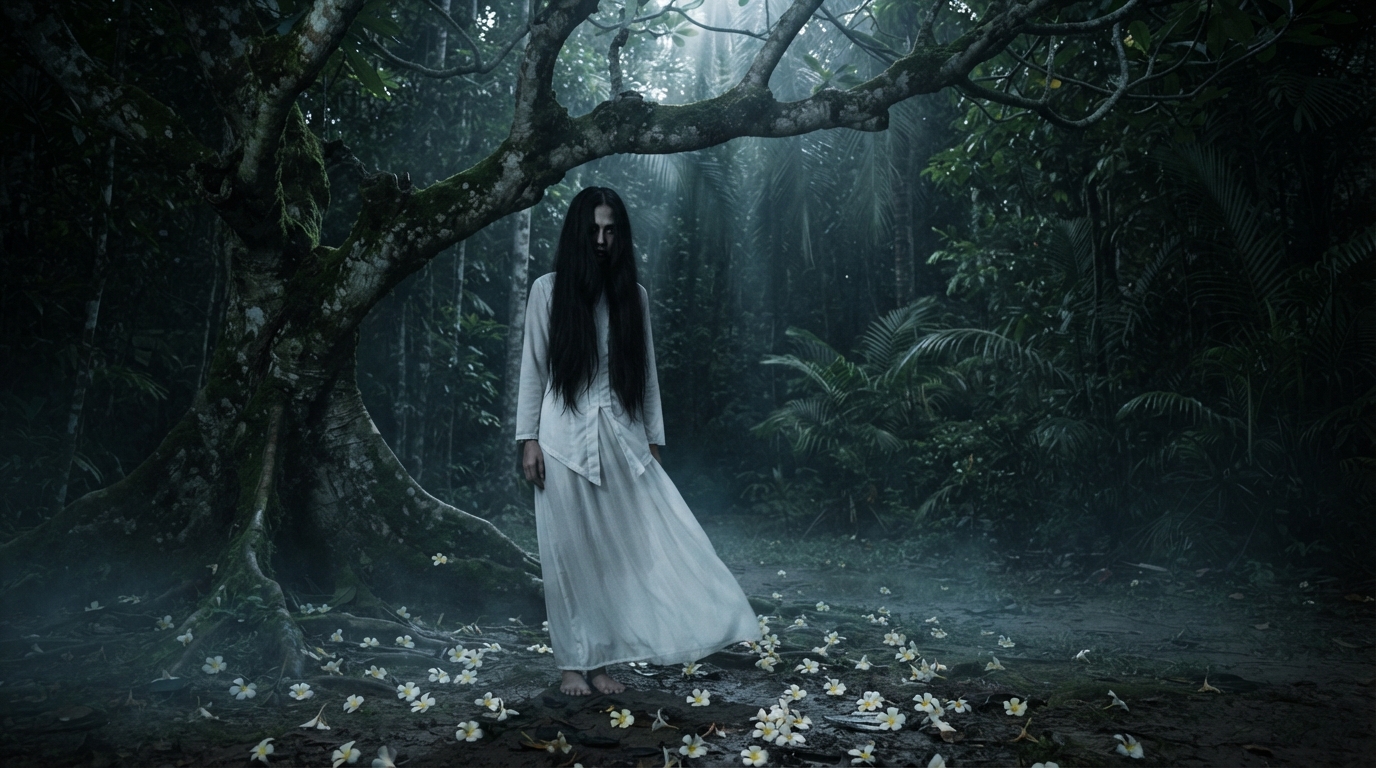
Brunei pontianak stories are among the most frightening tales whispered across the island of Borneo. Passed down through generations, these stories often begin in familiar places: a quiet road cutting through dense jungle, a lonely riverbank, an abandoned stretch of mangrove forest, or a remote village where strange sounds echo after dark.
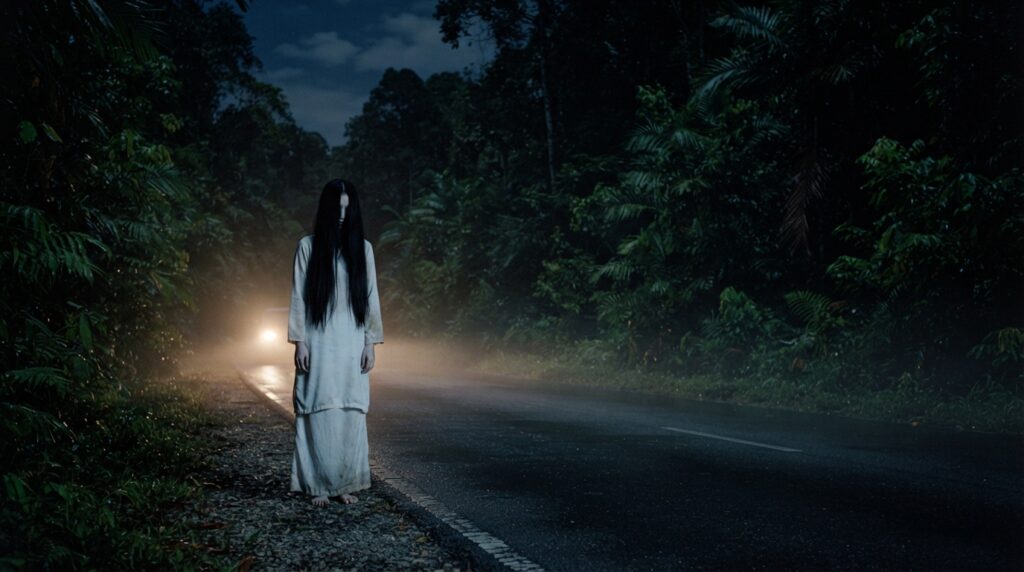
Unlike many modern ghost stories, Brunei pontianak stories are deeply rooted in local folklore, blending ancient Malay beliefs, indigenous traditions, and later Islamic influences. Even today, stories of mysterious women in white, unexplained cries in the darkness, and supernatural encounters continue to circulate across Brunei’s communities.
What Is a Pontianak?
The Pontianak, known in some regions as the Kuntilanak, is one of Southeast Asia’s most feared supernatural beings. Traditional folklore describes her as the spirit of a woman who died during childbirth or while pregnant. She is typically portrayed as a beautiful woman with long black hair and white clothing, capable of disguising her true, monstrous nature to lure victims closer.
According to traditional accounts, signs of a Pontianak’s presence may include the cry of a baby, the scent of flowers such as frangipani, or a sudden feeling of unease in an otherwise quiet location. In various versions of the legend across Borneo, Malaysia, Indonesia, and Brunei, the Pontianak is often associated with revenge, tragedy, and restless spirits.
Why Are Brunei’s Roads Linked to Pontianak Legends?
One of the most common themes in Brunei pontianak stories is the lonely road.
Brunei is covered by large areas of tropical rainforest, especially in the Temburong district, where roads and river routes often pass through dense jungle. Folklore frequently portrays these isolated locations as places where the boundary between the human and supernatural worlds becomes thinner.
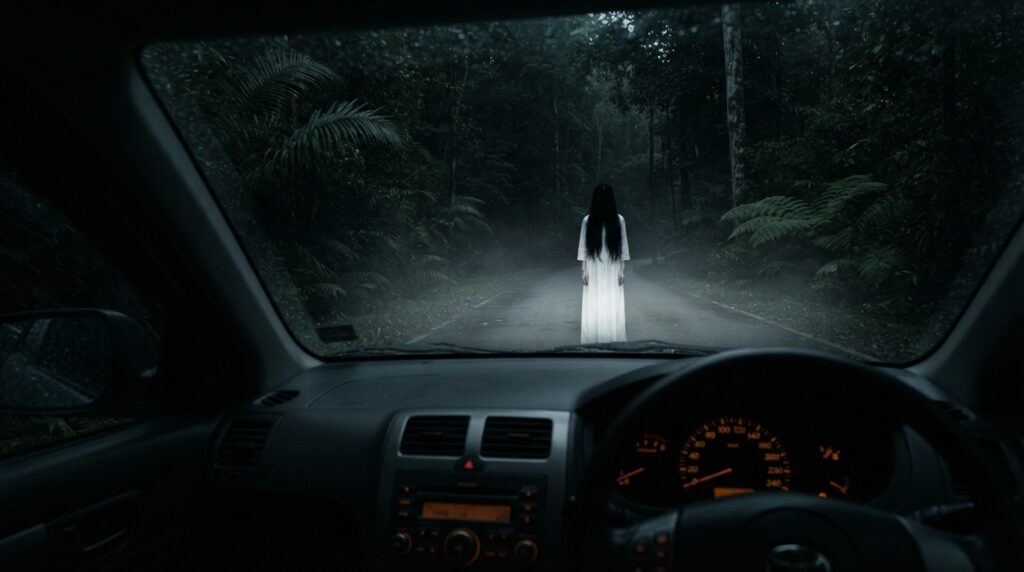
Drivers sometimes speak of seeing a lone woman standing beside a road late at night. In some legends, she appears suddenly where no person could realistically have walked. Other stories describe a woman asking for help before mysteriously disappearing. These tales are folklore and community stories rather than verified events, but they remain an important part of Brunei’s oral traditions.
The roads themselves add to the atmosphere. Long stretches of dark highway, distant jungle sounds, and a lack of traffic can easily fuel the imagination, especially during late-night journeys through Borneo’s wilderness.
The Temburong River Encounter
Among the more detailed modern retellings is a story connected to the Temburong River.
According to a published ghost-story account, a fisherman reportedly heard a woman crying near mangrove forests during a moonless night. Drawn toward the sound, he moved closer before experiencing what was described as a terrifying encounter that left unexplained marks on his boat. The story has reportedly continued to circulate among local boatmen for decades.
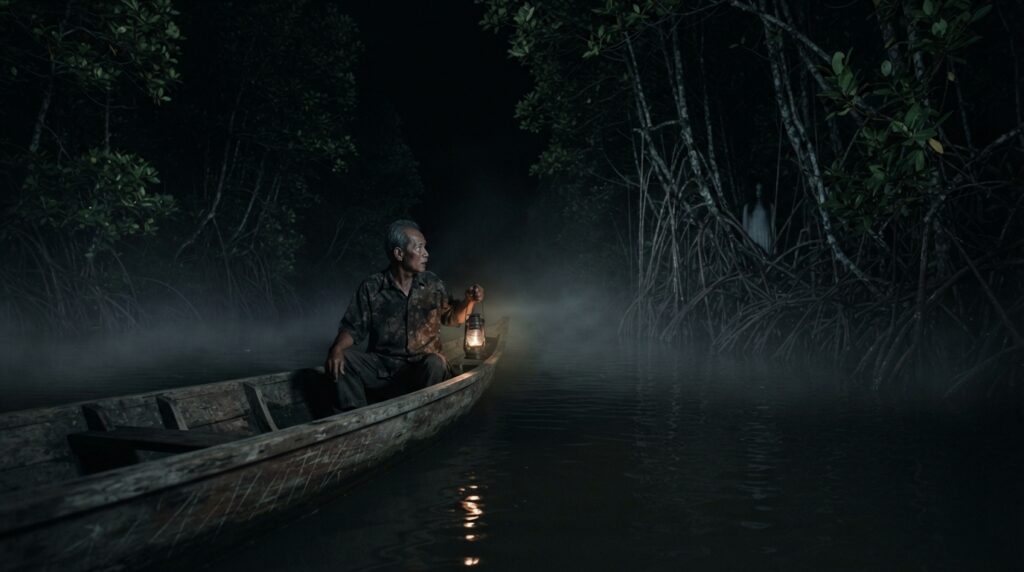
Whether viewed as folklore, legend, or alleged paranormal experience, the story reflects a common feature of Brunei pontianak stories: the combination of water, darkness, and isolation.
The Kampong Ayer Pontianak Legend
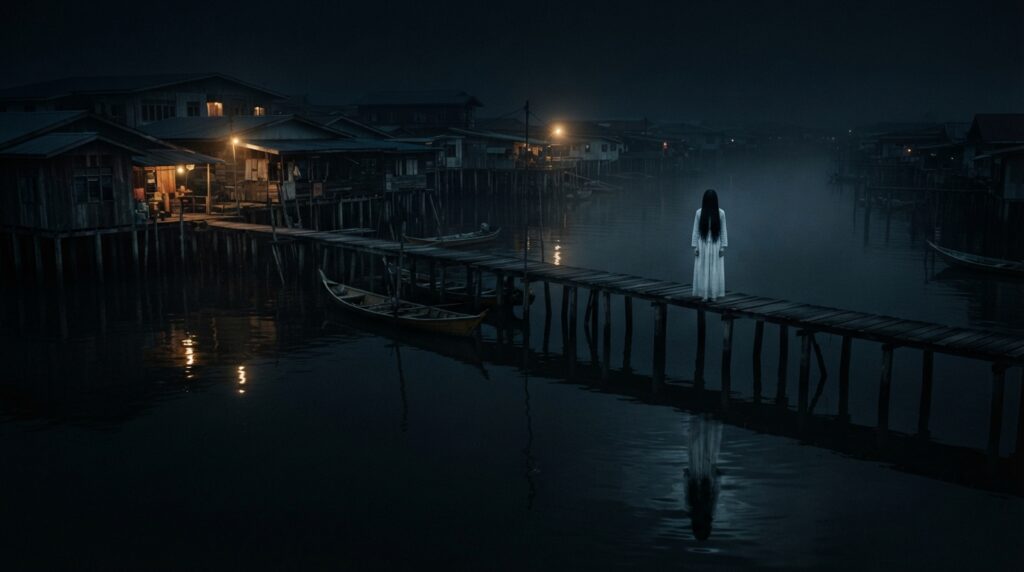
Another story that has gained attention involves sightings near Kampong Ayer, the famous water village often called the “Venice of the East.”
Online retellings describe alleged encounters with a Pontianak-like figure seen near the stilt houses and waterways after dark. These stories have been shared through horror-story channels and community discussions, adding modern versions to an already ancient tradition.
While such accounts remain unverified, they demonstrate how folklore continues to evolve in the digital age. Ghost stories once shared around village gatherings are now exchanged through videos, social media, and online communities.
The Mystery Behind The Legends
What makes Brunei pontianak stories so enduring?
Part of the answer may lie in the environment itself. Brunei’s landscape is dominated by rainforest, rivers, mangroves, and remote settlements. Strange sounds, sudden weather changes, animal cries, and limited visibility can create experiences that feel uncanny, particularly at night.
Folklore researchers often note that ghost stories serve important social functions. They warn against traveling alone, encourage caution around rivers and forests, and help communities explain tragic events or dangerous locations. This interpretation is a cultural explanation rather than a proven fact.
There is also the influence of older beliefs. Before the arrival of Islam, many indigenous communities across Borneo held animistic traditions involving spirits connected to nature. Later Islamic beliefs about jinn became intertwined with local folklore, creating a rich supernatural landscape that still shapes stories today.
The Connection to Borneo’s Wider Mythology
Interestingly, the Pontianak is not unique to Brunei.
The legend is found throughout Borneo and Southeast Asia. In Indonesian folklore, the Kuntilanak is one of the region’s most recognizable supernatural figures. The city of Pontianak in West Kalimantan even derives its name from local legends about Pontianak spirits inhabiting the area before its founding. Traditional accounts state that early settlers drove away these spirits before establishing the settlement.
This broader connection reinforces the idea that the Pontianak is one of Borneo’s most enduring mythical figures.
Why These Stories Refuse To Die
The enduring power of Brunei pontianak stories lies in their ambiguity.
No one can definitively prove them.
No one can completely disprove them either.
Every lonely road, every distant cry in the jungle, every unexplained shape seen from a moving vehicle adds another layer to the mythology. Whether viewed as supernatural encounters, cautionary tales, or reflections of humanity’s fear of the unknown, these stories continue to captivate new generations.
And if you ever find yourself driving alone through a quiet road in Brunei after midnight, with the rainforest pressing close against the darkness, you may remember one simple piece of local folklore:
If you see a woman in white standing alone beside the road, some say it’s best not to stop.
If you liked this story, read Penanggalan vs Pontianak: The Terrifying Difference Between Southeast Asia’s Most Feared Female Vampires
Follow us on Youtube!
Leave a Reply