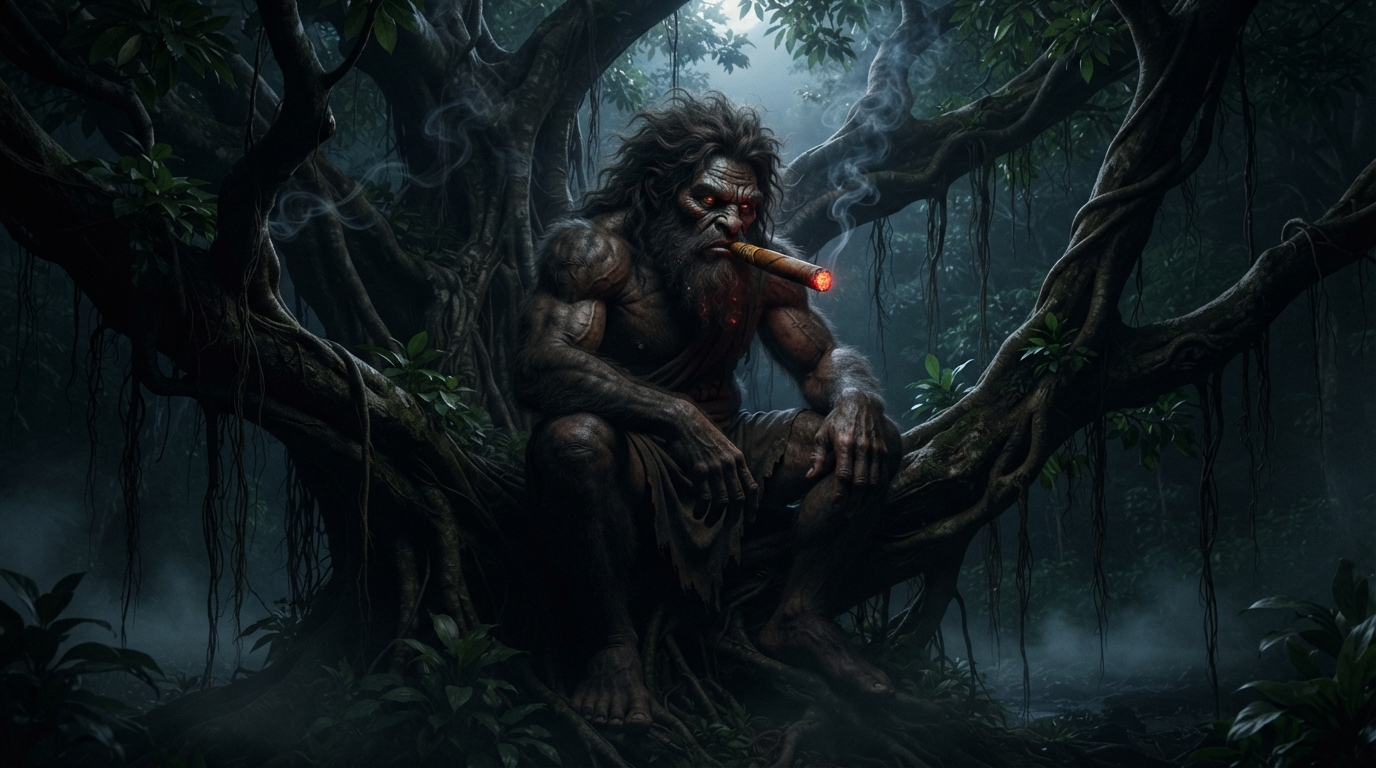
Kapre is one of the most recognizable supernatural beings in Philippine mythology. Towering above ordinary humans and often described as a giant tree-dwelling spirit, the kapre has fascinated generations of Filipinos with stories of glowing eyes, drifting tobacco smoke, and encounters deep in the night. Unlike many monsters in Southeast Asian folklore, the kapre is not always portrayed as evil. Instead, it occupies a mysterious middle ground, acting as guardian, trickster, and sometimes even protector of ancient trees and forests.
The enduring popularity of kapre filipino folklore comes from the creature’s connection to nature and the unexplained. For centuries, travellers, farmers, and villagers have shared stories about becoming lost in familiar places, seeing glowing ember high in the trees, or smelling tobacco where no smoker could possibly be found.
What is a Kapre?
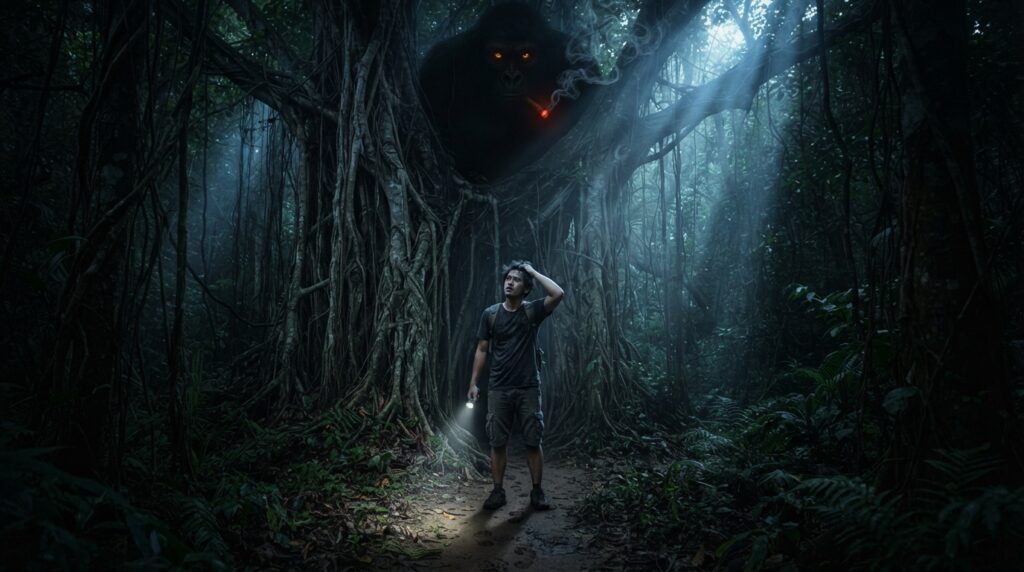
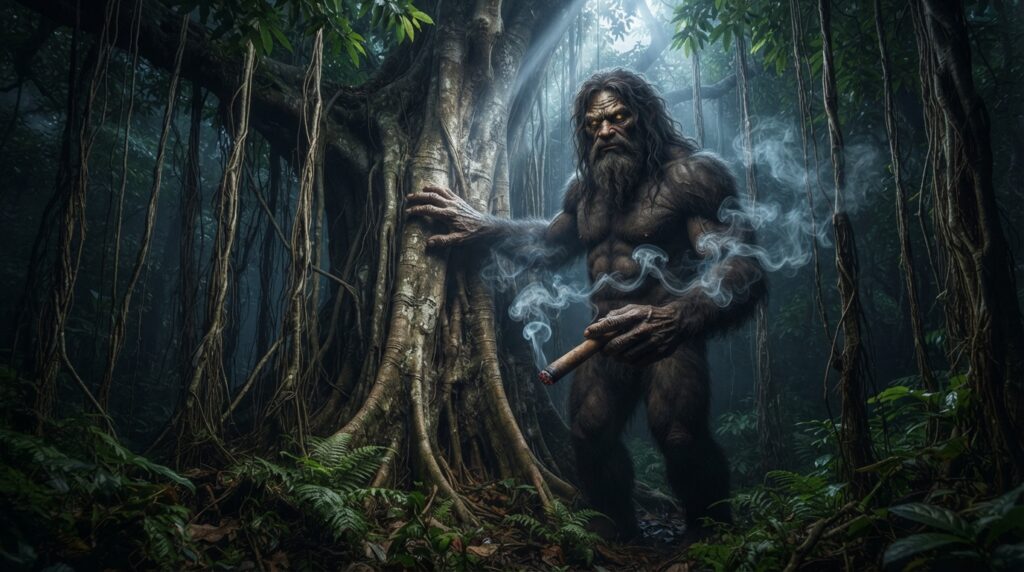
In traditional folklore, the kapre is described as a gigantic, dark-colored, hairy humanoid creature that lives in large trees. Commonly associated with ancient balete trees, acacia trees, bamboo groves, and mango trees, the creature is often portrayed sitting on a branch smoking a large cigar.
Accounts vary depending on the region, but most versions describe the kapre as standing between seven and nine feet tall, possessing immense strength and glowing eyes. Many stories also mention a powerful odour, tobacco smoke, or a strange sensation of being watched shortly before a sighting.
Unlike creatures such as the aswang or manananggal, the kapre is generally not depicted as a predatory monster. Instead, it is more often seen as a territorial spirit connected to specific trees or natural locations.
The Giant Smoker in the Trees
One of the most famous elements of kapre filipino folklore is the creature’s love of tobacco.
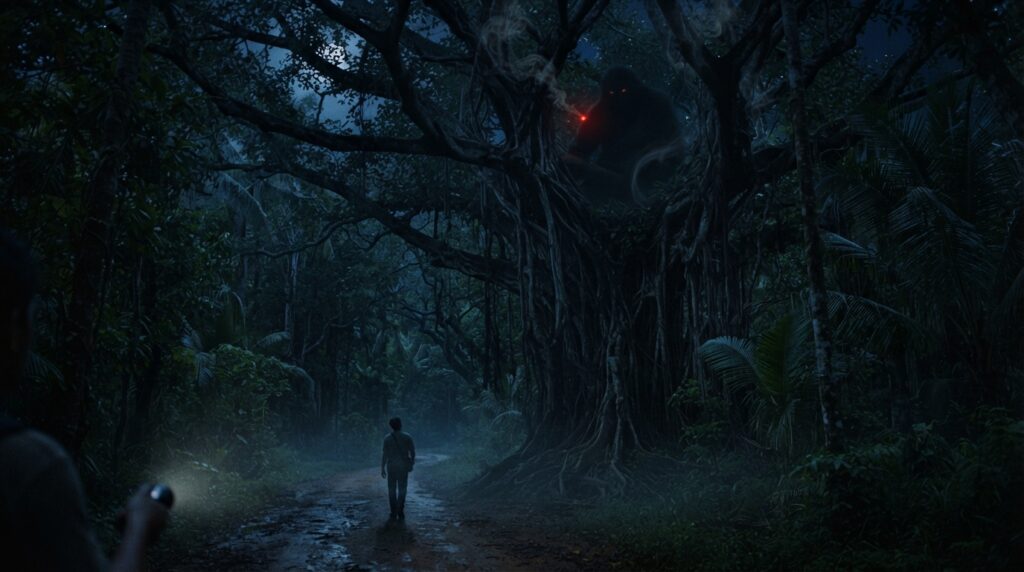
Traditional stories describe seeing a glowing red ember floating high among tree branches late at night. Curious observers sometimes mistake it for a lantern or firefly until they realize it is far too large or positioned too high above the ground. Folklore says this glow comes from the cigar constantly smoked by the kapre.
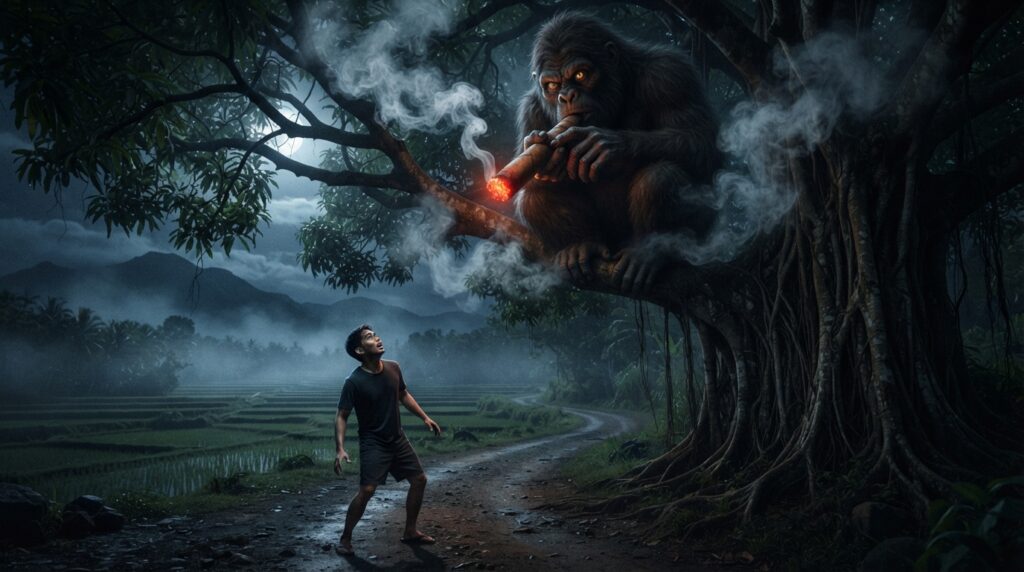
Many rural communities have long associated unexplained tobacco smells with a nearby kapre. In some stories, the smell appears suddenly in isolated areas where nobody else is present. This simple detail has become one of the most recognisable signs that a kapre may be nearby.
Famous Stories and Urban Legends
One of the most common kapre legends involves travellers becoming mysteriously lost.
According to folklore, a kapre can confuse people and cause them to wander in circles, even in places they know well. A person may repeatedly pass the same tree, trail, or rock without realizing it until the spell eventually breaks. This motif appears across numerous regions of the Philippines.
Another recurring story involves villagers encountering unusually large footprints beneath ancient trees after reporting strange noises the night before. While no verified evidence has ever confirmed such claims, these stories continue to be shared throughout rural communities.
Some tales portray the kapre as surprisingly friendly. Certain legends suggest that a kapre may develop affection for a human and quietly watch over them from afar. Others claim the spirit may even offer guidance or favours to those who show respect toward its tree.
Why Are Balete Trees Feared?
The connection between the kapre and balete trees is one of the strongest themes in Philippine folklore.
Balete trees often appear enormous, with tangled roots, hollow trunks, and hanging vines that create a dramatic appearance, especially at night. Long before modern lighting, these trees naturally inspired both awe and fear.
Many communities traditionally discouraged disturbing old balete trees because they were believed to house supernatural beings such as kapres, engkantos, and other spirits. In some stories, anyone who damages a kapre’s tree risks angering the spirit and bringing misfortune upon themselves.
The Mystery Behind the Legend
What makes the kapre so fascinating is that the legend sits between folklore and environmental storytelling.
Many researchers view the creature as a reflection of humanity’s respect for nature. By associating large ancient trees with powerful supernatural guardians, communities created powerful reasons to avoid unnecessary destruction of the forest. This interpretation is cultural analysis rather than a documented ancient belief.
There is also mystery surrounding the origins of the kapre itself. Historical sources suggest that the modern image evolved through a combination of indigenous tree-spirit traditions and influences from the Spanish colonial era. The very name “kapre” is linked to the word “cafre,” which Spanish colonizers used in historical contexts. Over centuries, these cultural influences blended into the giant tree spirit known today.
Why the Kapre Remains Popular Today
The kapre continues to appear in books, films, television shows, comics, and online horror stories throughout the Philippines. Its appeal comes from its ambiguity. Unlike many supernatural creatures, the kapre is neither completely good nor completely evil. It is mysterious, unpredictable, and connected to the wild places that still exist beyond modern cities.
Perhaps that is why the legend refuses to disappear.
After all, if you are walking through a quiet rural road at night and suddenly smell tobacco drifting from an ancient tree overhead, you may find yourself wondering if a giant unseen figure is watching from the branches.
And according to kapre filipino folklore, looking up may not always be the best idea.
If you enjoyed this story, check out Tikbalang: The Twisted Forest Guardian and Trickster of the Philippine Jungles
Follow is on TikTok!
Leave a Reply