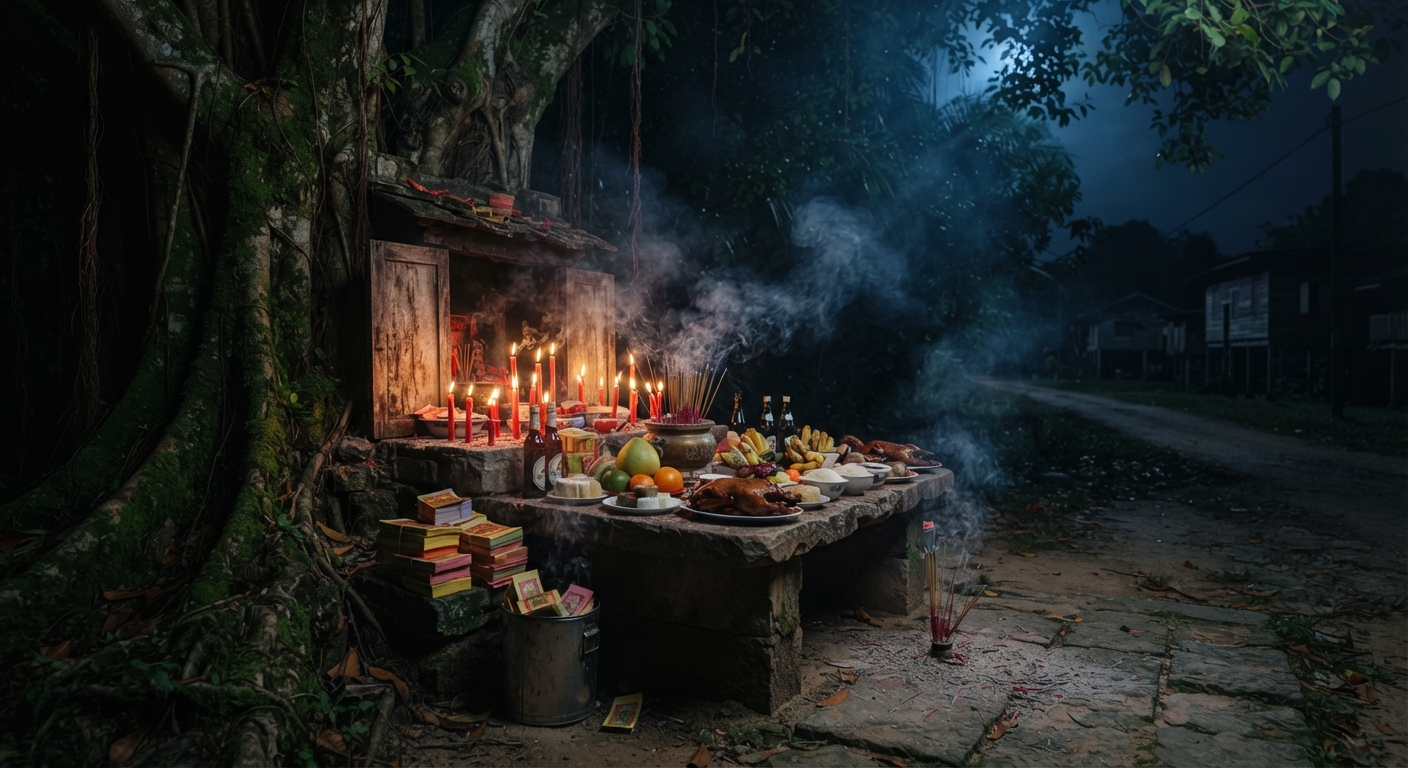
Hungry Ghost Month Taboos remain among the most fascinating and widely observed supernatural traditions in Malaysia and Singapore. Every year, during the seventh month of the Chinese lunar calendar, many people believe that the boundary between the living and spirit worlds becomes thinner, allowing wandering spirits to roam freely among humans. During this period, offerings appear along roadsides, joss paper burns into the night sky, and entire communities observe customs designed to avoid offending unseen visitors.
While some people view these practices as superstition, others regard them as important cultural traditions rooted in respect for ancestors and forgotten souls. Whether one believes in ghosts or not, the Hungry Ghost Month Taboos continue to shape behaviour across Malaysia and Singapore every year.
What Is Hungry Ghost Month?
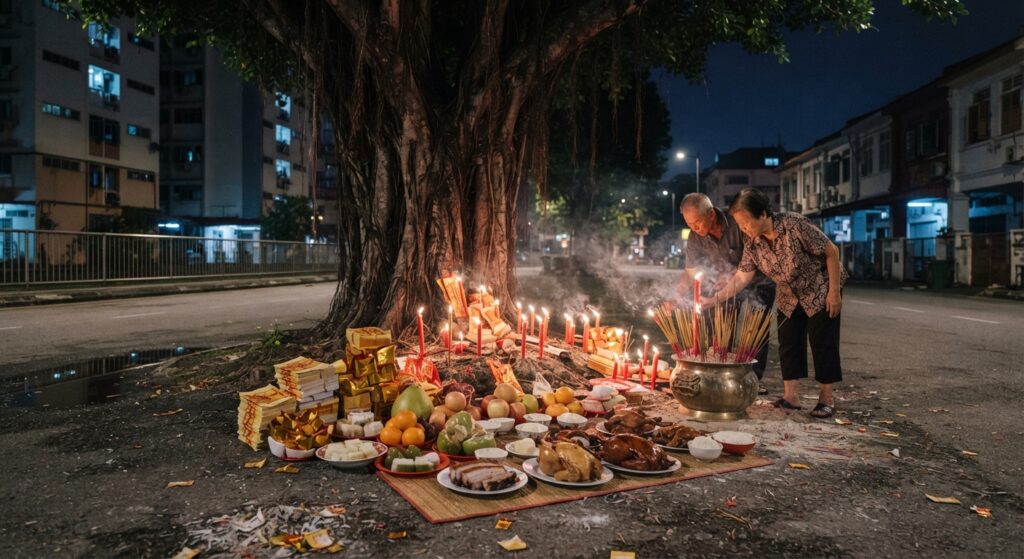
According to traditional Chinese belief, the seventh lunar month is a period when spirits are allowed to visit the human world. Families honour their ancestors with food, incense, and offerings, while additional offerings are made for wandering spirits believed to have no descendants to care for them.
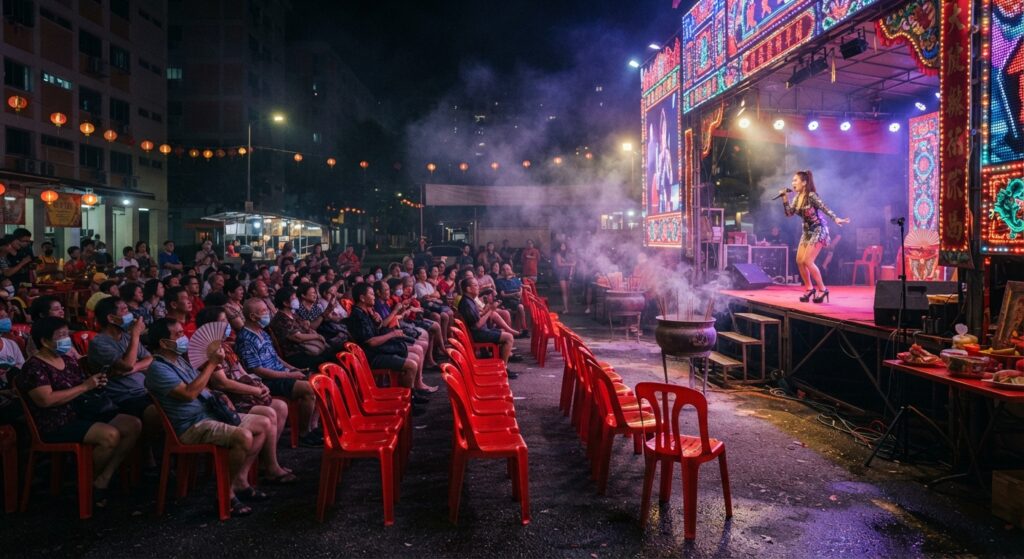
In Malaysia and Singapore, the month is marked by visible customs such as roadside food offerings, incense burning, paper effigy ceremonies, temple rituals, and colourful getai performances. These practices are especially prominent in areas with large Chinese communities.
Because spirits are believed to be more active during this period, numerous Hungry Ghost Month Taboos have developed over generations.
Hungry Ghost Month Taboos: What You Should Never Do
1. Never Disturb Offerings
One of the most widely observed Hungry Ghost Month Taboos is avoiding offerings left for spirits.
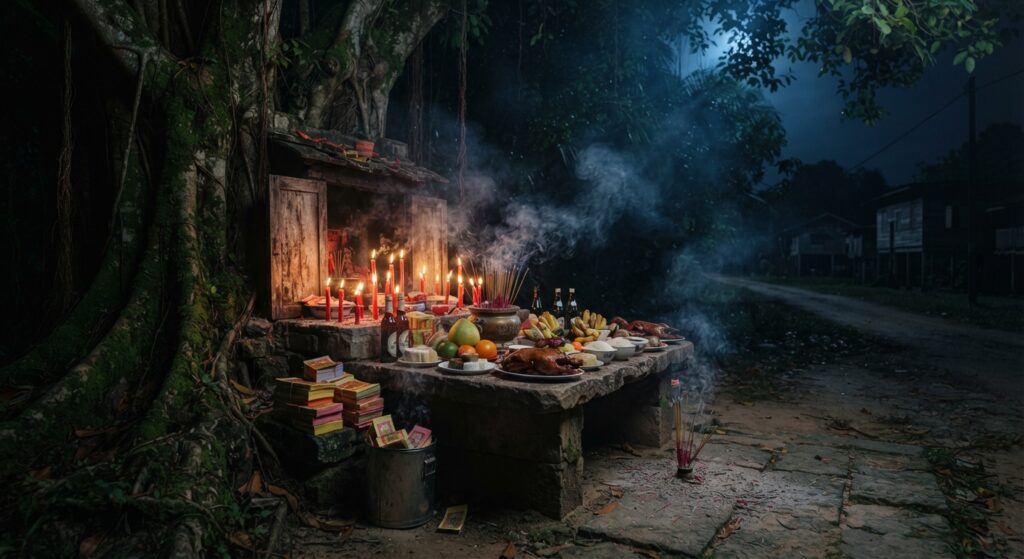
Food, incense, candles, fruits, and joss paper are often placed along roadsides, under trees, and near buildings. Many believe stepping on, kicking, moving, or disturbing these offerings could offend the spirits they are intended for.
This is one taboo that even many non-believers follow out of respect for cultural traditions.
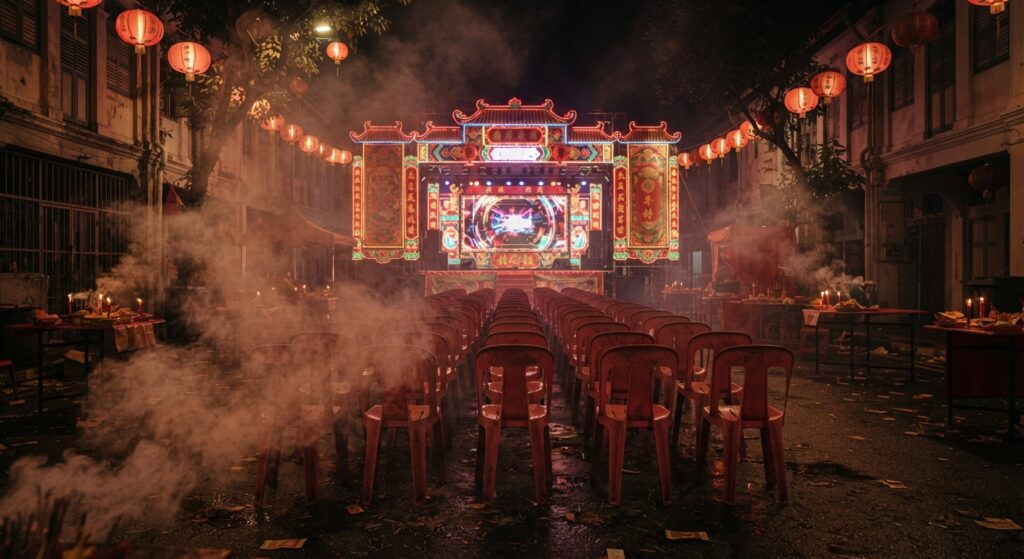
2. Never Sit in the Front Row at Getai
Getai performances are a famous feature of Hungry Ghost Month in Singapore and Malaysia.
You may notice empty seats near the front of the stage. According to tradition, these seats are reserved for visiting spirits. Sitting in them is considered disrespectful and potentially unlucky.
Whether symbolic or supernatural, the tradition remains surprisingly common.
3. Avoid Swimming at Night
Perhaps one of the most famous Hungry Ghost Month Taboos involves water.
According to folklore, wandering spirits may lurk in rivers, lakes, and the sea during Ghost Month. Traditional belief warns that swimming, especially at night, increases the risk of spiritual encounters or accidents.
While modern safety experts would likely attribute risks to poor visibility and water conditions, the supernatural explanation remains deeply rooted in local folklore.
4. Do Not Whistle After Dark
Across both Malaysia and Singapore, many elders warn against whistling at night during Ghost Month.
According to tradition, whistling may attract spirits or reveal your location to wandering entities. There is no evidence supporting this belief, but it remains one of the most frequently repeated Hungry Ghost Month Taboos.
5. Avoid Picking Up Money Found on the Ground
Another popular belief involves abandoned money.
Some traditions hold that money left on the ground may be connected to offerings or spiritual rituals. Picking it up could unintentionally interfere with those rituals or bring misfortune.
For many people, the safest option is simple: leave it where it is.
6. Avoid Major Life Decisions
One of the lesser-known Hungry Ghost Month Taboos is postponing major events.
Some families avoid weddings, house purchases, moving into new homes, renovations, or launching new businesses during Ghost Month due to concerns about bad luck.
However, not everyone follows this practice today, and many modern Feng Shui practitioners emphasize common sense rather than fear.
The Mysteries Behind the Taboos
What makes these customs so intriguing is that many may have practical origins hidden beneath supernatural explanations.
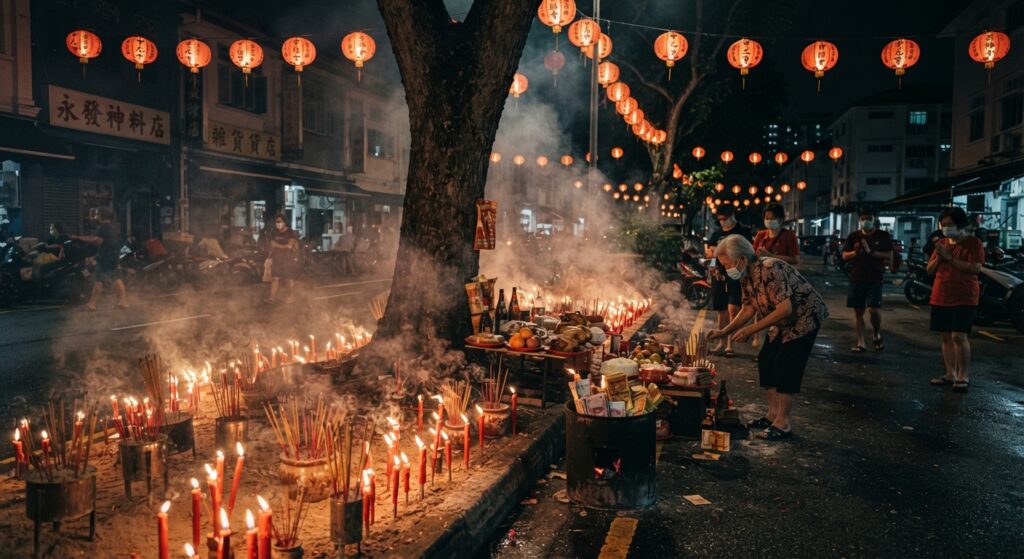
Avoiding swimming at night can reduce accident risks. Leaving offerings untouched shows respect for others’ religious practices. Staying away from open burning areas helps avoid injury. Some researchers and cultural observers suggest that practical safety measures may have gradually evolved into spiritual taboos. This interpretation is speculative and not explicitly stated in traditional folklore.
Another mystery involves the origin of the belief that the “gates of hell” open during the seventh month. Some religious authorities note that this concept is not universally accepted and may have developed through evolving interpretations of Taoist and Buddhist rituals over time.
Why These Taboos Still Matter Today
Even in modern cities like Kuala Lumpur, Penang, Johor Bahru, and Singapore, the Hungry Ghost Month Taboos continue to influence daily life.
Businesses may schedule events differently. Families continue preparing offerings. Neighbourhoods host elaborate ceremonies and performances. What began as ancient spiritual traditions has become an enduring part of local cultural heritage.
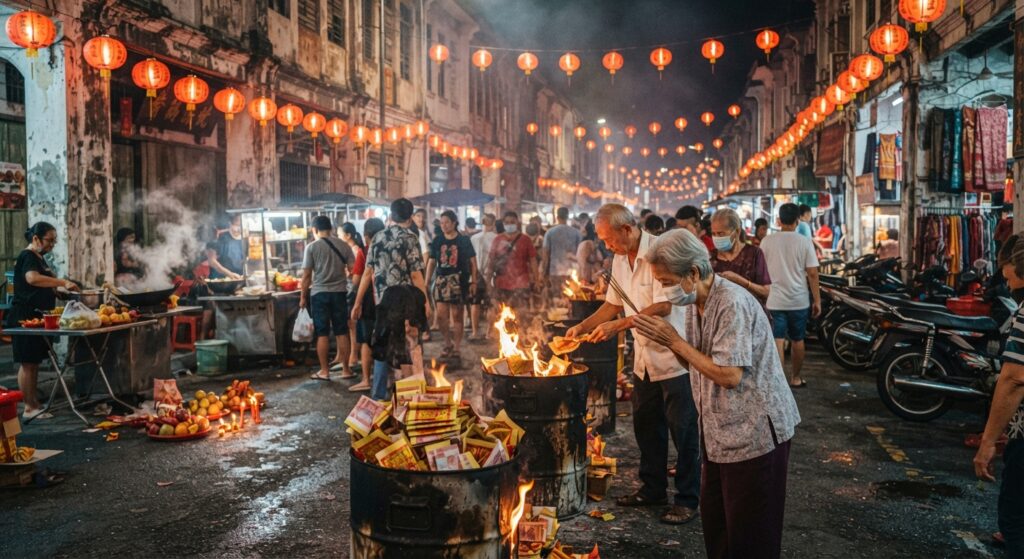
Regardless of whether one believes in wandering spirits, these customs reveal something deeper about human nature: our desire to honour the past, respect the unknown, and maintain harmony between the seen and unseen worlds.
Final Thoughts
The enduring popularity of Hungry Ghost Month Taboos demonstrates how folklore remains woven into everyday life across Malaysia and Singapore. Some people follow them out of spiritual belief. Others observe them out of tradition or respect. Yet the result is the same: for one month each year, ancient legends come alive in modern cities.
And if you’ve ever walked past an unattended offering late at night, noticed a perfectly empty front-row seat at a getai show, or heard someone warn you not to whistle after dark, you’ve already encountered a living piece of Southeast Asian folklore.
If you enjoyed this article, read 3 Powerful Chinese New Year Traditions
Follow us on Youtube!
Leave a Reply