
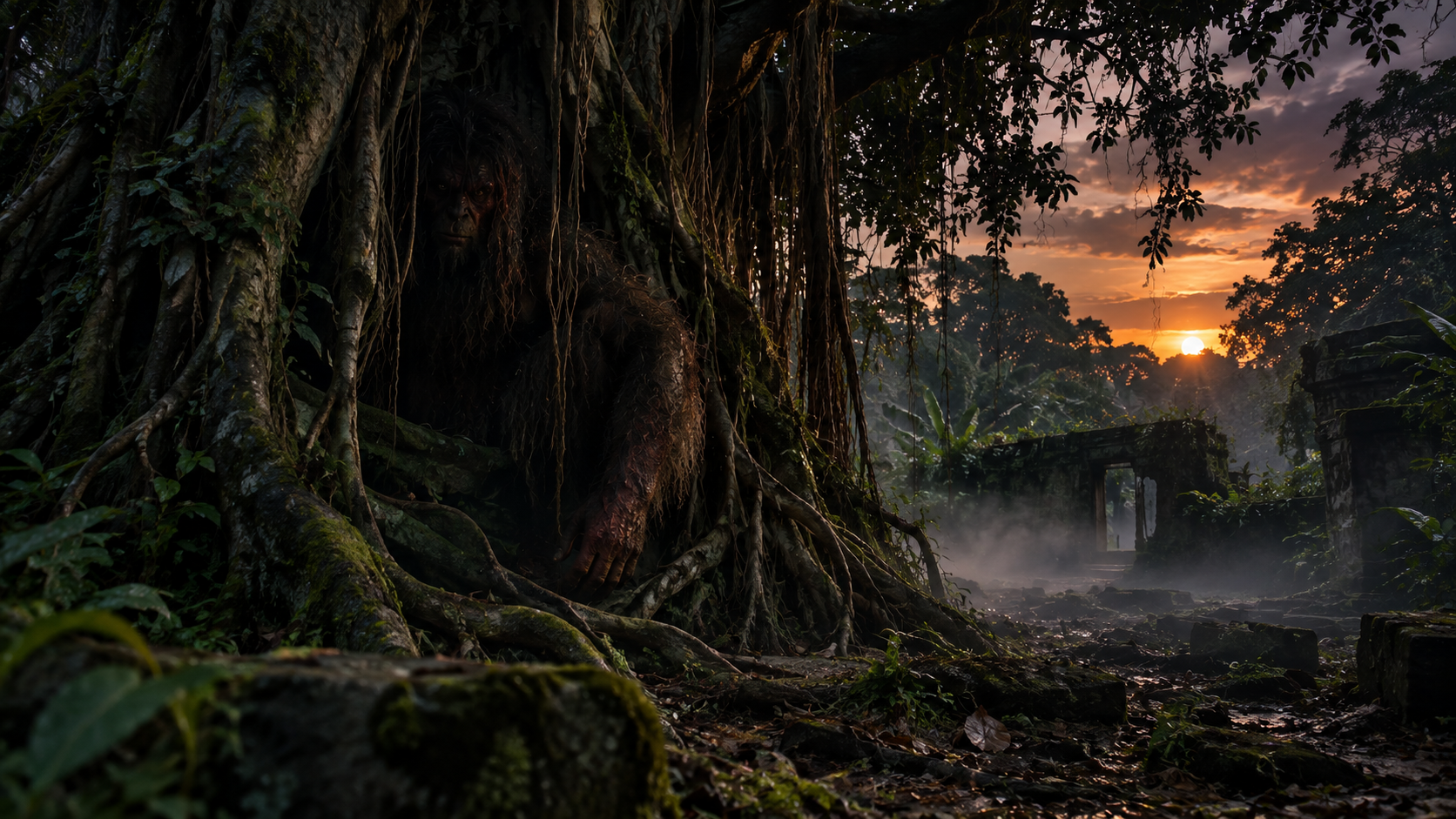
Genderuwo is one of the most well known of the supernatural beings in Indonesian folklore. Picture yourself in an abandoned building after dark. The rooms are empty, the air is damp and then suddenly something moves in the dark. You hear the stones hitting the roof, you smell something odd and you have that distinct feeling that you are being watched.
In Javanese oral tradition, that unseen observer could be a genderuwo (a huge hairy humanoid spirit) associated with deserted buildings, huge trees and dark lonely places.
But the thing is far stranger than its terrifying appearance would suggest.
What Is a Genderuwo?
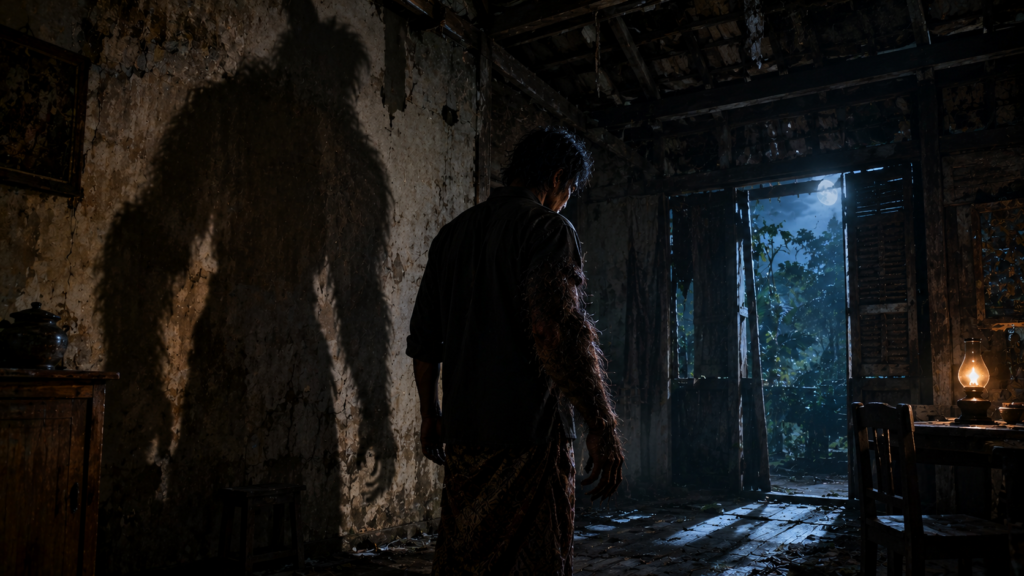
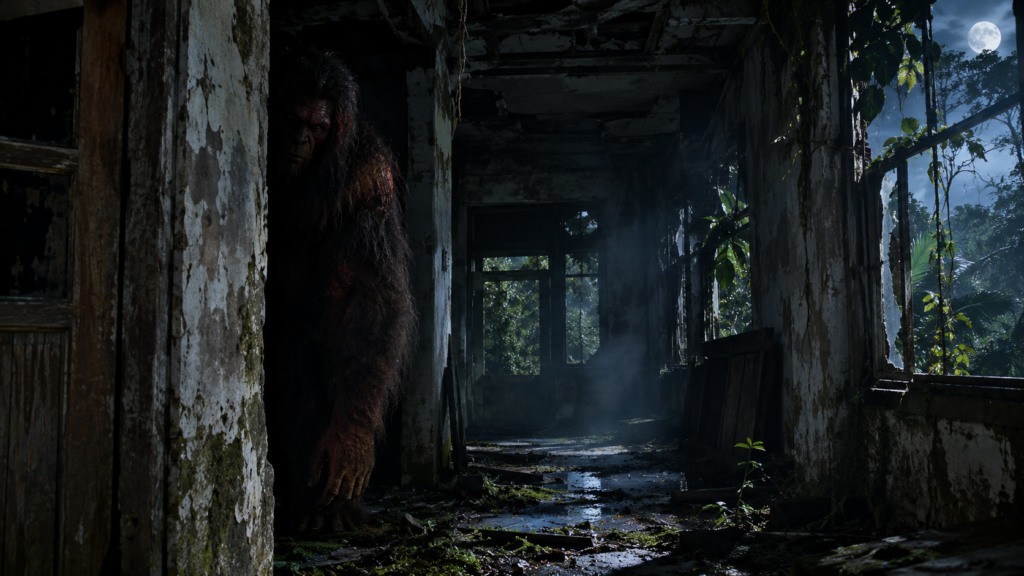
The traditional description is of a huge, muscular, ape-like humanoid with a great deal of hair. The Indonesian accounts tend to describe it as having reddish black skin under the hair and a very human form.
The legend is particularly linked to Java (where gendruwo is another common pronunciation) and the Sundanese also have the related name gandaruwa.
Interestingly, the name has very old linguistic roots, being traceable via Old Javanese/Kawi gandharwa to the Sanskrit gandharva (the Gandharvas being the supernatural beings of the Hindu and Buddhist traditions).
Over the centuries the Javanese creature acquired a completely different and far more sinister identity.
Where does the Genderuwo hide?
Forget haunted castles.
The genderuwo traditionally prefers places much closer to ordinary life.
Folklore links it with old houses, derelict buildings, big shady trees, wet rocks and the sort of isolated damp corner that very few people actually go into.
This is of course why abandoned buildings in rural Java can become the subject of genderuwo stories. As the buildings go to ruin and the vegetation takes over, the stories can grow up around them as well.
A strange noise becomes footsteps.
A moving shadow becomes something that is watching.
And an empty building suddenly does not feel empty at all.
The Stones on the Roof
Not every Genderuwo story is one of a terrifying face to face encounter.
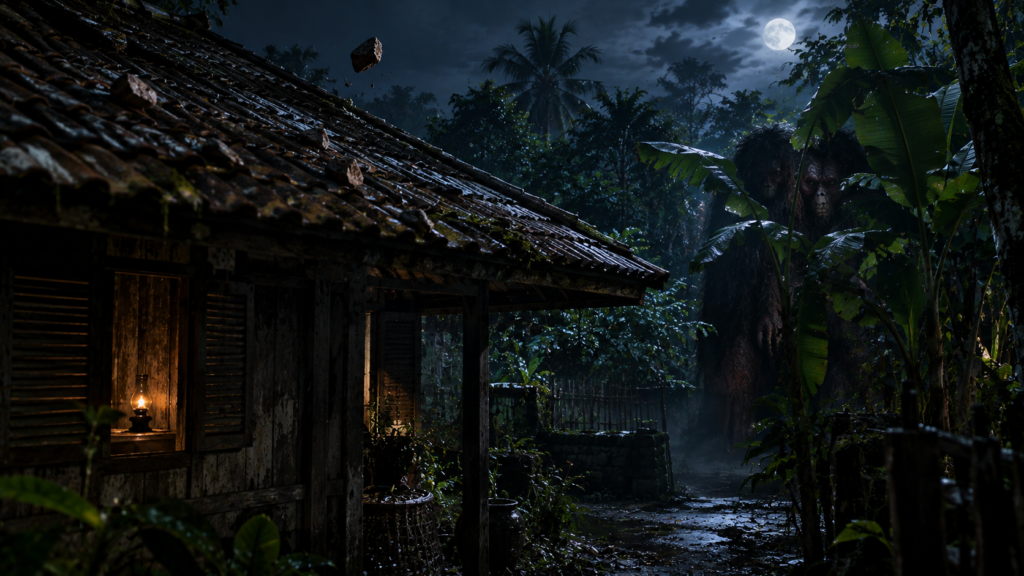
It’s a memedi (a type of Javanese spirit) and these are the terrifying supernatural beings that are principally known for scaring the bejeezus out of you. The folklore is that they are mischievous and will on occasion just randomly throw stones onto the roof at night.
It’s easy to imagine the scene.
A family is sleeping.
Suddenly: tap… tap… tap.
Small stones hit the roof.
Someone goes outside.
Nobody is there.
The house is once again silent.
Then another stone lands.
Within the folklore, such an unexplained disturbance would be put down to the mischievous spirit down the lane.
The Stranger Who Isn’t What He Seems
One of the more sinister aspects of the genderuwo legend is that of shapeshifting.
Traditional and modern accounts alike often attribute the ability to take on a human form to the spirit. Some of the stories go so far as to state that it can take the form of someone you know, which of course takes the folklore in a far more psychologically unsettling direction.
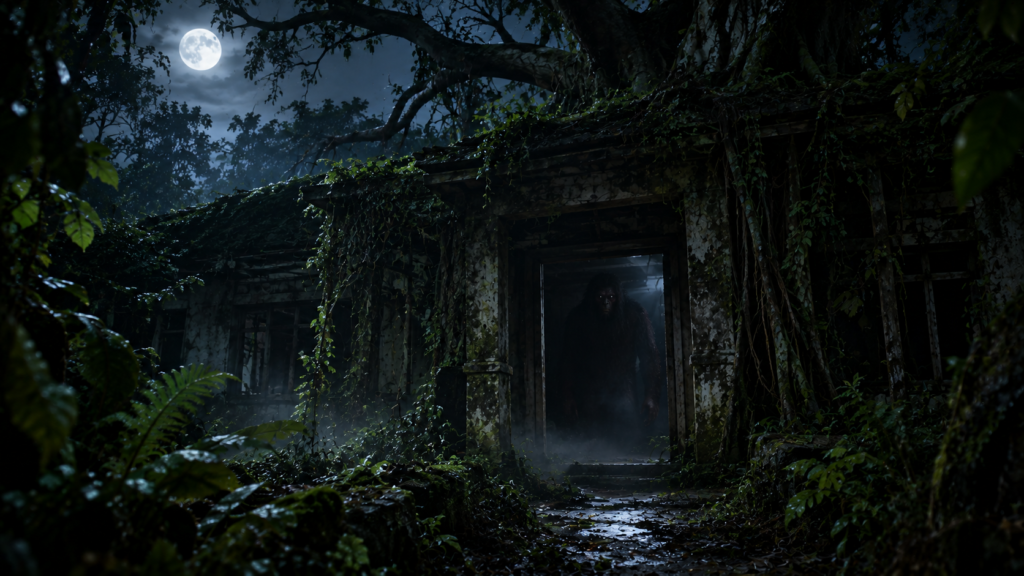
These are all folklore, not documented paranormal evidence. There is in fact no physical evidence whatsoever to prove the existence of a genderuwo.
But as storytelling, the shapeshifting idea produces an unsettling question:
What if the supernatural isn’t actually supernatural?
Famous Places and Alleged Sightings
There are several places on Java with traditions linking them to the creature. Indonesian folklore speaks of forested areas near Wonogiri and Kulon Progo, again these are just local folklore and should not be taken as proof of the existence of such a creature.
Other stories are based on the classic indicators: odd noises, a nasty smell, movement you can’t account for in old buildings, or the general feeling of being watched by something in the shadows of a big tree.
Such experiences are purely anecdotal. The more likely explanations are animals, buildings settling, wind, poor lighting and human expectation.
Yet that very uncertainty is precisely where the urban legends grow.
Could there be a meaning behind the monster?
There’s another way of looking at the genderuwo.
Many of its supposed habitats are places humans traditionally had good reasons to approach cautiously: abandoned structures, forests, enormous old trees, wet rocks and isolated locations.
Stories of something dangerous in those places would serve to reinforce the practical warnings (especially at night). That’s my interpretation of the folk tale, it’s not the actual origin of the tale.
The creature also survives because it’s continuing to evolve with Indonesian culture. It features in horror media and in everyday speech and in 2018 then-President Joko Widodo famously used the term ‘politik genderuwo’ as a metaphor for politics that’s all about instilling fear.
Why the Genderuwo Still Frightens People
The real power of the genderuwo is in its very appearance.
It’s where the thing is supposed to be waiting.
You don’t need to go into some distant jungle to find one in the stories. All you need is an abandoned house, a huge tree or some inexplicable noise at night.
Maybe a branch caused it.
Perhaps an animal crossed the roof.
Maybe your imagination filled the dark with something that wasn’t there at all.
But according to old Javanese folklore if you hear stones hitting the roof of an empty building and smell something odd in the dark you might want to ask yourself one question:
Is the building really empty?
If you enjoyed this story, read a similar type of folk creature in The Chilling Truth Behind the Bukit Timah Monkey Man: Singapore’s Most Mysterious Cryptid
If you love videos, follow us on Facebook!
Leave a Reply