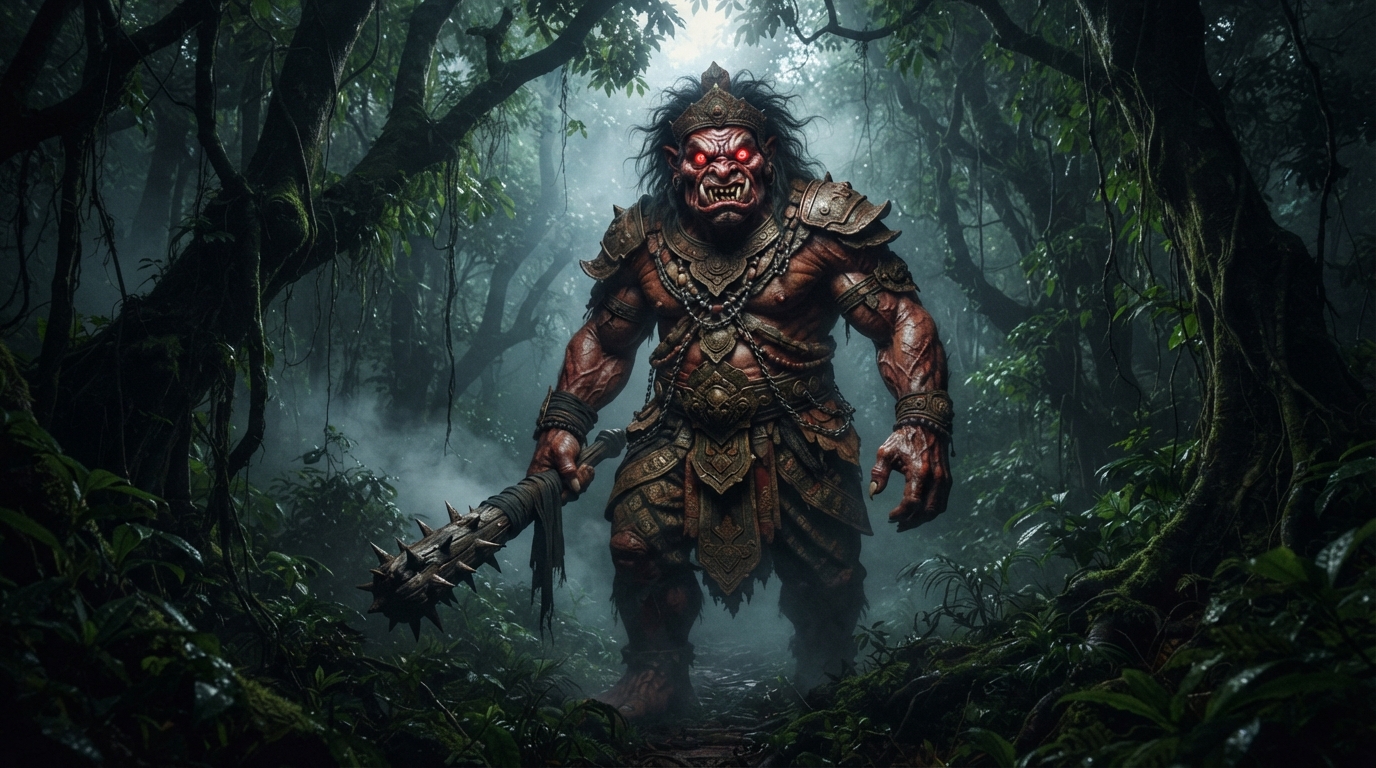
For centuries, the Belu have terrified and fascinated people in Myanmar. Of all the creatures in Burmese mythology, the Belu is perhaps the most well-known, being described as a fierce ogre with great strength, supernatural powers, and a harmful hunger for human flesh. However, the story of the Belu is much more complicated than that of a simple monster. In the myths, literature, Buddhist tales, and traditional theatre of Myanmar, the Belu appear not only as villains but also as guardians, warriors, and even as figures who have been redeemed.
Belu’s images can still be seen all over Myanmar, with them being carved into the architecture of temples, shown in traditional performances, and remembered in the stories which have been passed down from one generation to the next. Their continued presence has made them one of the most well-known mythical creatures in Burmese culture.
Follow us on Instagram!
What Is a Belu?
In the folklore of Belu from Myanmar a Belu is usually described as an ogre or demon-like humanoid who has the ability to change his shape. In numerous tales they are shown as creatures that eat people and can disguise themselves as normal humans in order to trick their victims. Their supernatural powers often consist of great strength, intelligence and magical abilities.
In traditional representations Belu is depicted as having frightening characteristics such as bulging eyes, sharp teeth, green or red skin, and huge muscular bodies. Yet, since they are able to change their shape, their monstrous look is not always visible. Many stories tell of them hiding among people until it is exactly the right moment to show their true form.
The Belu are similar to the Rakshasa of Indian mythology, which shows the historical cultural influences that have shaped Burmese folklore throughout many centuries.
The Man-Eating Ogre of Burmese Legends
Traditional stories often show the Belu as predators that hunt people.
In the stories referred to, people who go too far into forests, mountains, or other isolated areas might meet strangers who are in fact not human. A person who appears to be a traveller, a merchant, or a beautiful woman could be hiding behind the guise of a Belu. Sometimes the only indication of the monster underneath the illusion is a faint clue.
A common feature in modern versions of the story is that some Belu are unable to fully hide certain physical traits even when they are disguised; in some traditions, unusual eyes or the inability to blink are mentioned as being indicative of their real identity.
The stories acted as cautions regarding strangers, the dangers of the wilderness, and the risks involved in going alone into unknown areas.
Belu and the Burmese Ramayana
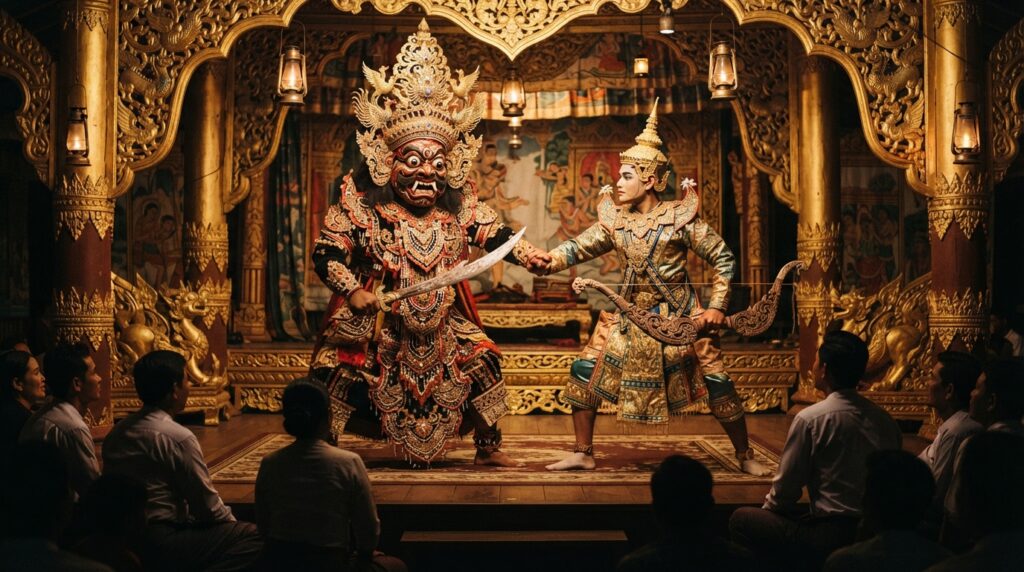
The reason why the Belu Myanmar legend is still so well known is that it is linked to the Yama Zatdaw, which is the Burmese version of the Indian epic Ramayana.
One of the most popular theatrical traditions in Myanmar is the Yama Zatdaw, and the Belu characters have important roles in the story. Generations of Burmese audiences have come to know these powerful ogres and the disputes they have with heroes and gods as a result of the drama, dance, the costumes and the performances.
Because of the popularity of this theatrical tradition, Belu stayed at the heart of Myanmar’s cultural imagination for a long time after many of the older folktales had disappeared from everyday life.
Not All Belu Are Evil
One surprising aspect of Burmese Myth is that all the Belu are portrayed as purely malevolent.
In traditional folklore the various kinds of Belu are distinguished. Some of them are said to be dangerous and eat people, while others are seen as kinder creatures connected with fruits, flowers, and having benevolent qualities. A case often mentioned in the folklore is that of Popa Medaw, who belongs to the more benevolent type of Belu.
A common feature of mythology in Southeast Asia is that supernatural beings seldom fit properly into categories of absolute good or evil, since they usually have both destructive and protective aspects.
The Guardian Ogres of Myanmar
Those who visit Myanmar are frequently surprised to see Belu located in the vicinity of sacred sites.
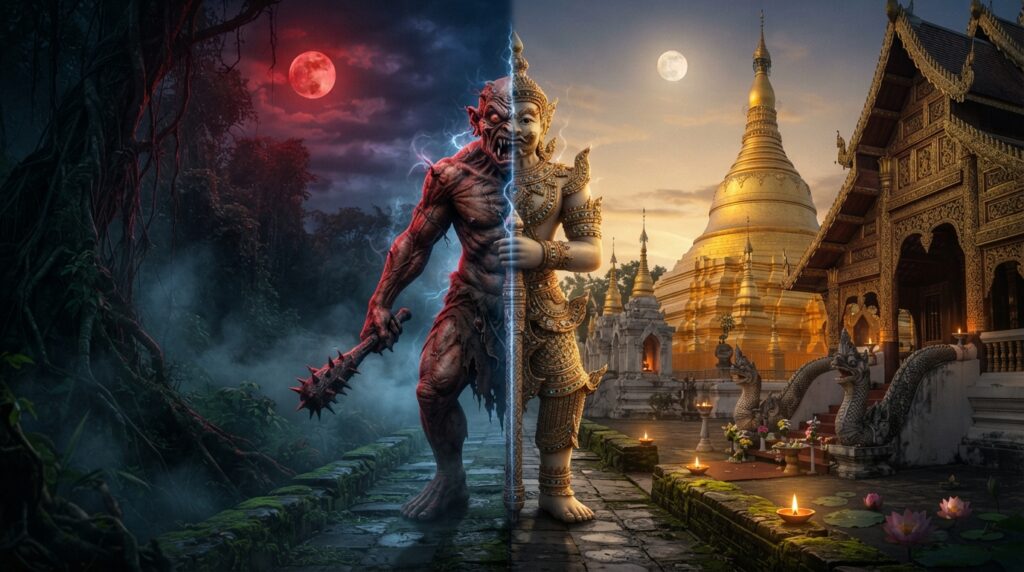
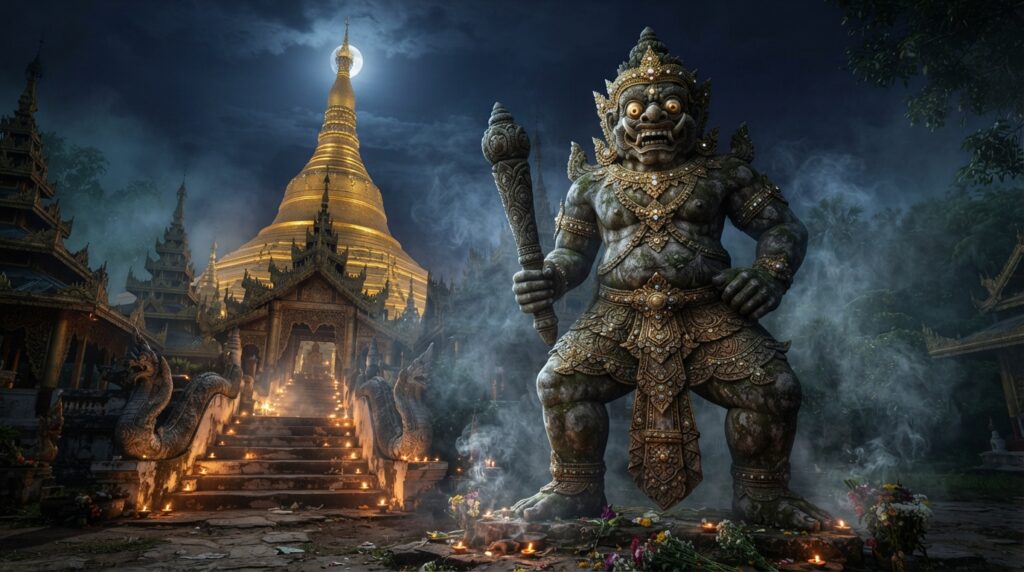
Large Belu statues can be found guarding temples, pagodas, and other religious structures throughout the country. Rather than threatening worshippers, these figures often serve protective functions, standing watch over against harmful spirits and negative influences.
The fact that it serves this dual role is highly interesting. Although it is the kind of creature feared in folktales as one that devours humans, it can also be seen as a guardian of sacred places.
The idea is similar to other traditions across Asia, in which terrifying supernatural beings are thought to protect rather than to cause harm.
Mysteries and Urban Legends
Such as many legendary creatures, the Belu lies somewhere between mythology and mystery.
It is common for traditional storytellers to talk about situations in which beings that at first seem to be humans are discovered to be shapeshifting monsters; even though these stories form part of folklore and are not documented occurrences, they still serve to inspire local ghost stories and lead to supernatural speculation.
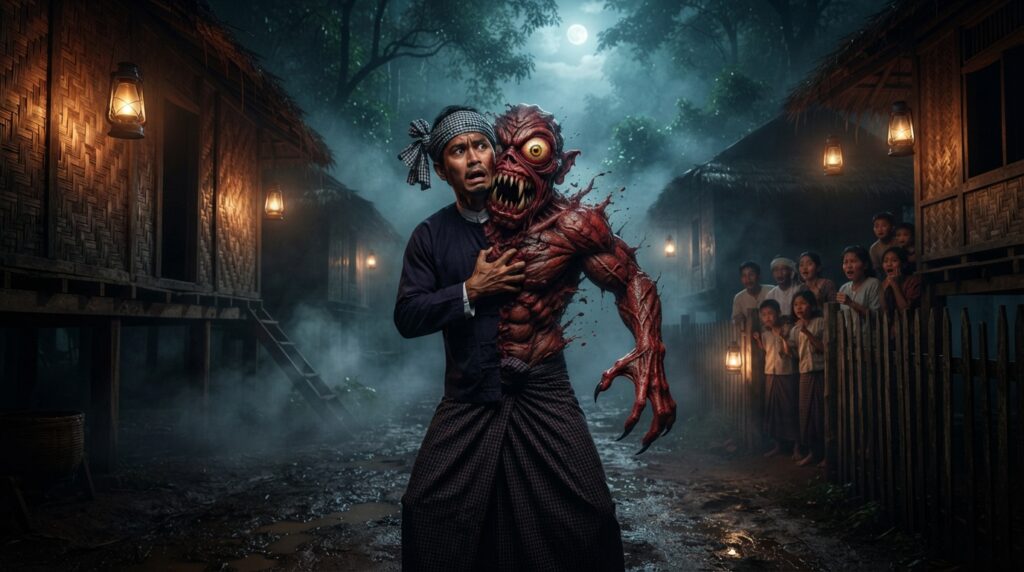
The fact that it can change shape contributes to the lasting attractiveness of the legend. Since Belus can be neither easily identified nor avoided, they may at first sight seem completely ordinary. This element of uncertainty gives rise to a continuous sense of suspense in traditional stories.
There is another mystery concerning the creature’s change from that of a feared monster to a respected guardian. Folklore provides no single explanation for why a man-eating ogre should become a protector of temples, leaving room for different interpretations.
Why Belu Still Fascinate Today
The reason why Belu Myanmar remains so popular is because of its complexity.
They are monsters.
They are guardians.
They are villains.
They are sometimes heroes.
While many mythical creatures have only one function, the Belu at the same time represent various aspects of human fears and beliefs.
The fact that they still appear in Burmese theatre, folklore, religious art and popular culture shows how firmly they are embedded in Myanmar’s traditions. For many people the Belu is the ideal mythical figure since it is terrifying enough to cause fear but at the same time complex enough to cause fascination.
Maybe that is the reason why the story has survived.
This is because, according to Burmese myth, the most dangerous monsters are not necessarily those which resemble monsters.
If you enjoyed this Belu Myanmar story, also read 7 Hidden Mysteries of Trowulan in Southeast Asia that will blow your mind!
Leave a Reply