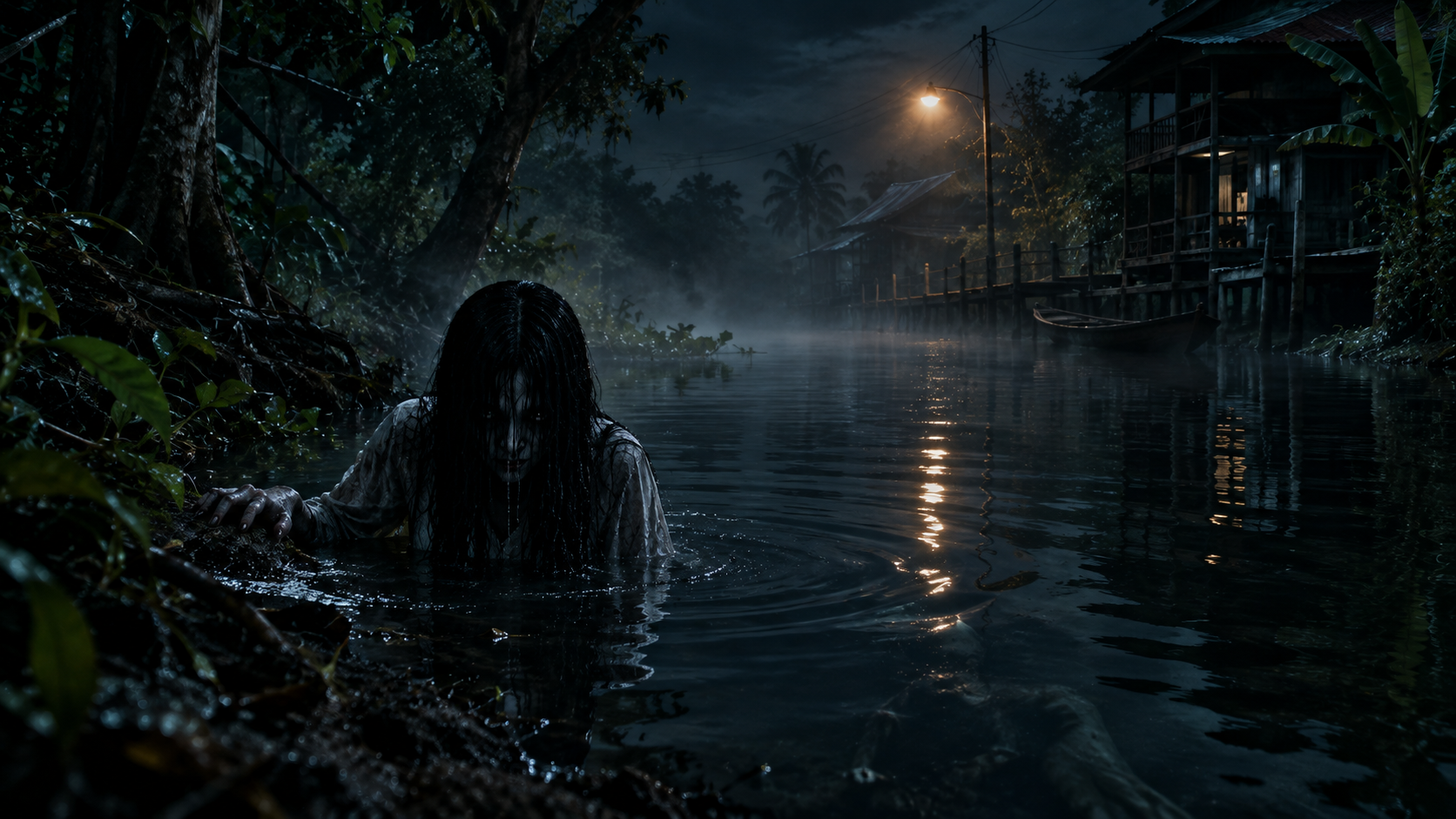
Phi Tai Hong are one of the most feared of all the spirits in Thai folklore. It’s not the name of a single ghost per se but rather refers to the spirit of someone who died suddenly and in an unnatural manner (murder, drowning, accident etc). In the Thai tradition these are considered particularly dangerous spirits as death came so abruptly that the person’s life, their desires and their emotions were all cut short.
Unlike all the other named spirits of Thailand, a Phi Tai Hong could theoretically have once been a normal person. That may be what makes the story so unsettling really; the monster was once human.
What exactly is a Phi Tai Hong?
The Thai term ‘tai hong’ refers to an unnatural or violent death. The classic examples would be murder or drowning. A ‘phi tai hong’ is therefore the spirit that is believed to be the result of such a death.
Suddenness is the key element. The tradition draws the line between these deaths and those in which a person knows that death is coming and has time to prepare.
As per oral tradition the shock of an untimely death leaves the spirit angry and restless. The ghost may remain attached to the location where the tragedy happened, and folklore particularly warns against visiting that place immediately afterwards.
The Seven Most Dangerous Days
One very disturbing theory is that the first seven days after a sudden death are the period when a Phi Tai Hong is at its most active.
Standard advice is to steer clear of the location where the victim died during that period. The spirit is thought to be extremely angry and grieving as it was left with no chance to carry out its plans or to prepare for death.
That belief turns an otherwise ordinary place into a frightening one.
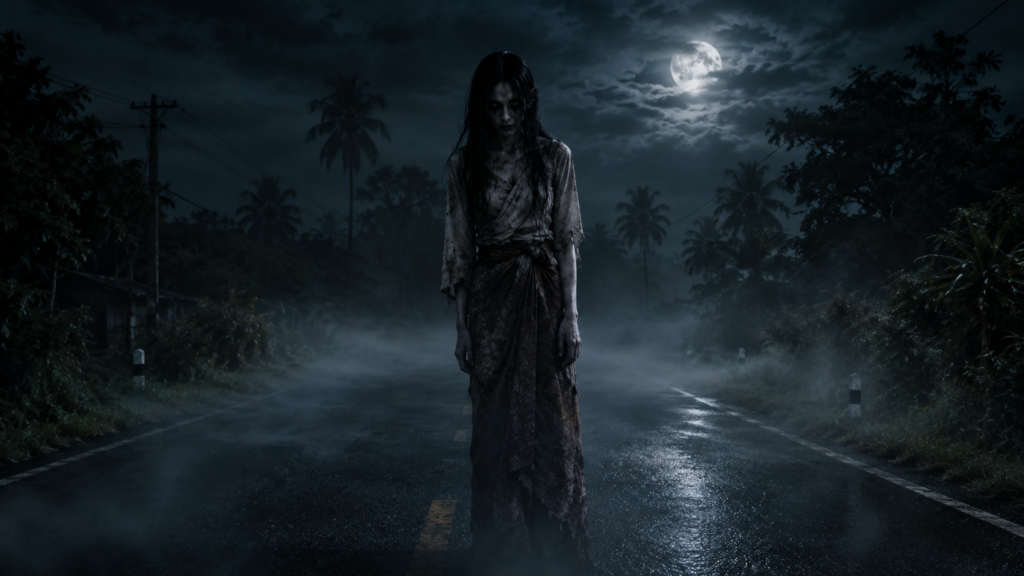
A quiet road.
A canal.
An empty house.
After tragedy strikes the local folklore is that the place itself becomes haunted.
The Ghost That Repeats Its Own Death
Perhaps the most lurid Phi Tai Hong legend is that of repetition.
Some of the traditions state that the ghosts will go on to try and harm the living in the same way as they died. So a ghost associated with a drowning is said to haunt the very spot where the drowning took place.
Modern folklore has taken this concept further to dangerous bends, accident sites, waterways and derelict buildings. There’s a tradition of interpreting the fact that people have died at the same spot on more than one occasion as proof that a spirit is still about that location.
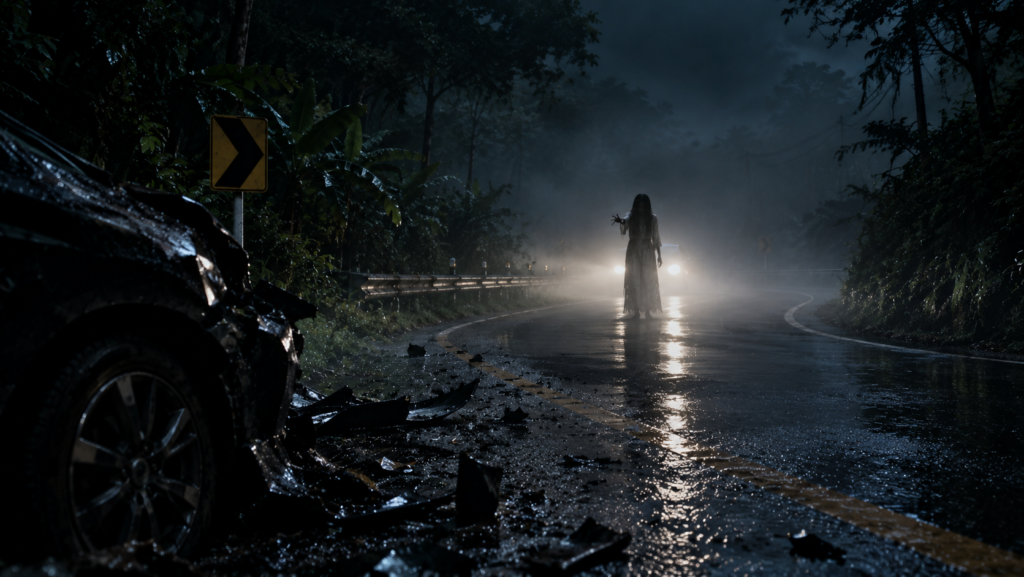
There’s of course no evidence that ghosts are to blame for such accidents. You can easily find a number of terrestrial explanations in the form of dangerous road design, water conditions, visibility, speed and sheer coincidence. The folklore aspect is what turns the repeated tragedy into something genuinely terrifying though: a place that remembers how you died.
Thailand’s Most Famous Connection: Mae Nak
One form of Phi Tai Hong is that associated with a woman who dies either in pregnancy or at the time of childbirth (commonly known as Tai Thang Klom or Tai Thong Klom).
This is of course the Mae Nak Phra Khanong legend, one of Thailand’s greatest ghost stories.
As per the well known story, Nak died in childbirth whilst her husband Mak was away. When he came back he was living with his dead wife and child until he realised that she was in fact a ghost.
The legend is that Nak went on to terrorise the inhabitants of Phra Khanong after Mak had fled from her. There’s a shrine to Mae Nak today at Wat Mahabut in Bangkok.
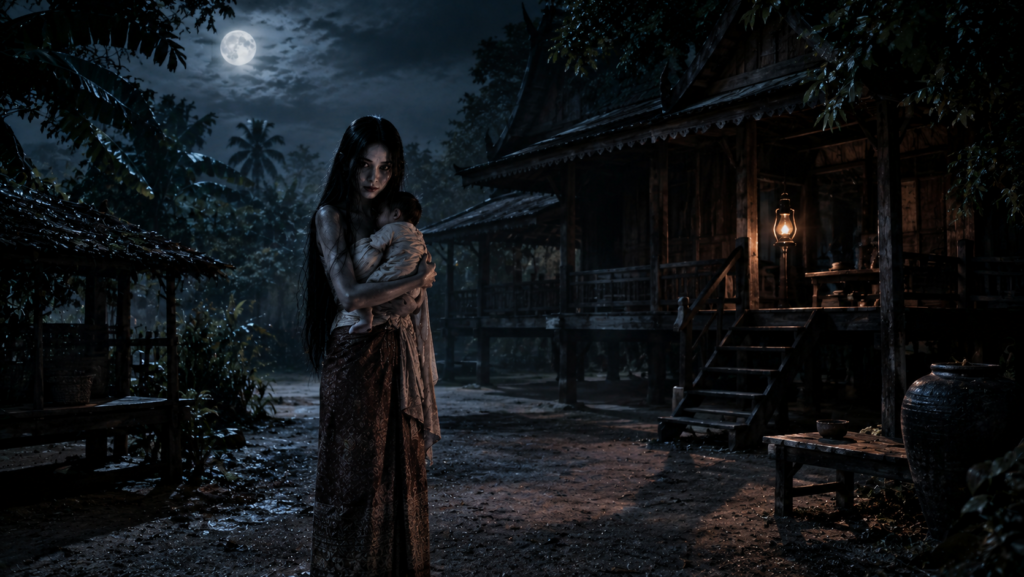
Interestingly the very famous ghost story itself is shrouded in a historical mystery. A newspaper report from 1899 is said to have claimed that the ghost story was actually invented by one of Nak’s sons who was concerned that his widowed father might remarry and split the family’s fortune. The details of the story as it is passed on vary enormously from version to version.
Sightings and Haunted Places
Unlike a creature with one set appearance, the Phi Tai Hong are defined primarily by how the person died rather than precisely what the resulting ghost looks like.
This enables the legend to attach itself to an almost infinite number of locations.
Traditional Thai ghost beliefs link spirits with abandoned houses, burial grounds, certain trees and places of death. The ghost tradition is very much part of Thai popular culture and has continued to evolve through the medium of film, TV and comics.
Reported supernatural experiences are still anecdotal. They can be compelling stories, but they don’t constitute evidence that a paranormal event actually took place.
Why are Phi Tai Hong supposedly so difficult to remove?
Thai folklore has these ghosts as being extremely aggressive and notoriously difficult to get rid of. The traditional stories speak of very elaborate rites to either remove them or to pacify them.
The explanation in the legend is quite emotional really. Ordinary death is the natural progression of life, whereas sudden violent death is a violent rupture of that progression.
A person goes somewhere thinking they’ll be back home.
They’ve got plans for tomorrow.
Then without warning, tomorrow is gone.
The ghost is everything that was left unfinished.
The Possible Meaning Behind the Legend
The Phi Tai Hong might in the end be saying something very human rather than just something supernatural.
Sudden death creates all sorts of unanswered questions. When something tragic happens in a place you’re familiar with, you tend to remember the place in a slightly different way afterwards. A normal road becomes ‘the road where it happened’. A canal becomes ‘the canal where it happened’.
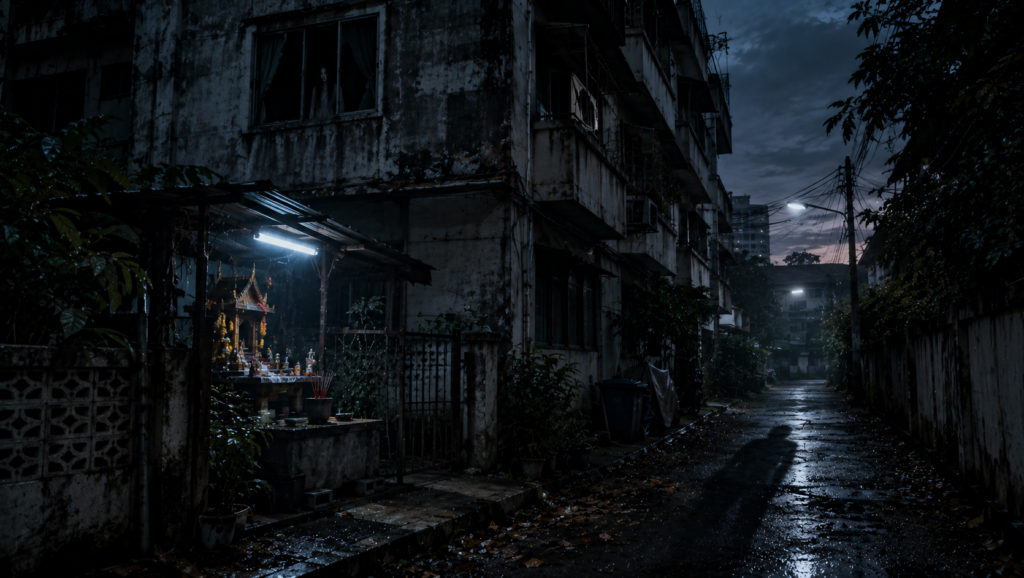
Folklore gives that emotional transformation a supernatural identity.
Thailand’s broader ghost culture is a blend of Buddhist popular beliefs and the older local spirit traditions.
From that point of view the Phi Tai Hong stories can be seen as cultural attempts to come to terms with sudden death, unprocessed grief, fear and the sheer uncertainty of dying unexpectedly.
The Mystery That Keeps Phi Tai Hong Alive
Maybe the real power of Phi Tai Hong is that the legend doesn’t need some ancient castle in the middle of the jungle.
It can start anywhere tragedy occurs.
A road you drive down every evening.
A canal by someone’s house.
An empty apartment.
A familiar intersection.
For the believer it may leave something behind. For the sceptic the stories are a case study in how a community turns a tragedy into folklore.
Either way, the Phi Tai Hong remains one of Thailand’s most unsettling supernatural ideas: the belief that when life ends without warning, part of the story may refuse to end with it.
If you love folklore-related videos, follow us on YouTube!
Leave a Reply