Chilling Moments in the History of Langkawi Island
You might have heard hundreds of different variations of the Mahsuri story in Langkawi, Malaysia. Over the years, people have been getting quite creative by adding their own narratives and versions to the story. The most widely accepted story is as follows:
Mahsuri was a pretty maiden who lived in Langkawi between 1762 and 1800. She was the daughter of Pandak Mayah and Endah Alang, immigrants from Phuket, Thailand. Mahsuri attracted many suitors and finally married Wan Darus, the younger brother of Dato Pekerma Jaya, a nobleman who was appointed to represent the Sultan in ruling Langkawi Island.

Their life was soon disrupted when Wan Darus had to leave to fight against the invading Siamese army. It was during this time that Mahsuri befriended a wandering poet from Sumatera, Deramang. This triggered the jealousy of Dato Pekerma Jaya’s wife, Wan Mahora. In Wan Darus’s absence, she accused Mahsuri of adultery. Dato Pekerma Jaya, having been incited by his wife, sentenced Mahsuri and Deramang to death without a trial.
Mahsuri was then tied under the scorching sun in Padang Matsirat, Langkawi, while awaiting her punishment. She pleaded her innocence, but no one believed her. However, when the execution was carried out, none of the daggers or swords could kill her. Finally accepting her fate, Mahsuri told them to kill her using her father’s ceremonial keris. When she was stabbed, white blood flowed from her wound, signifying her innocence.

With her dying breath, Mahsuri cursed Langkawi with seven generations of misfortune. The following are nine horrifying signs that the curse was real:
1. Immediate Invasion by Siamese Forces
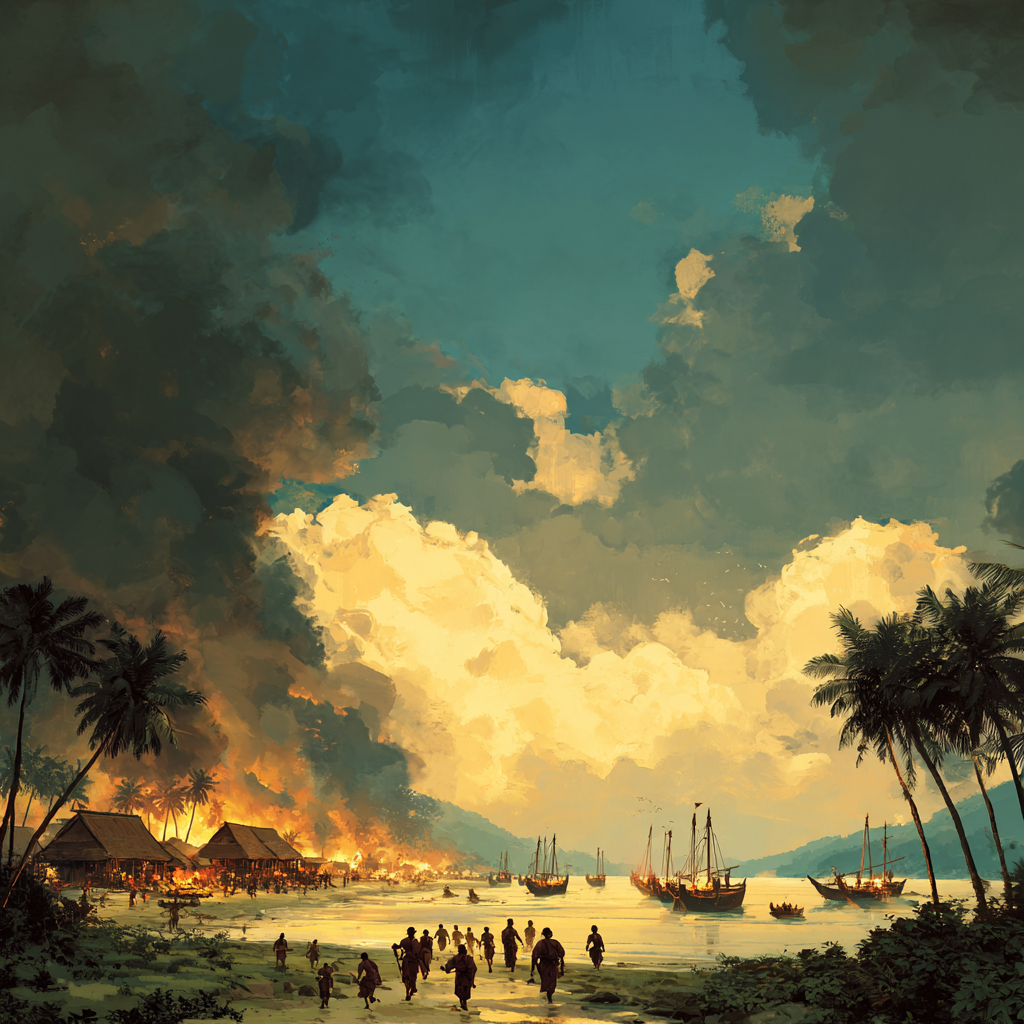
Following Mahsuri’s death, Langkawi was immediately attacked by Siamese forces, as if the island’s defence weakened the moment justice was betrayed. This attack marked the beginning of a long period of foreign conflict.
2. Burned Rice Fields
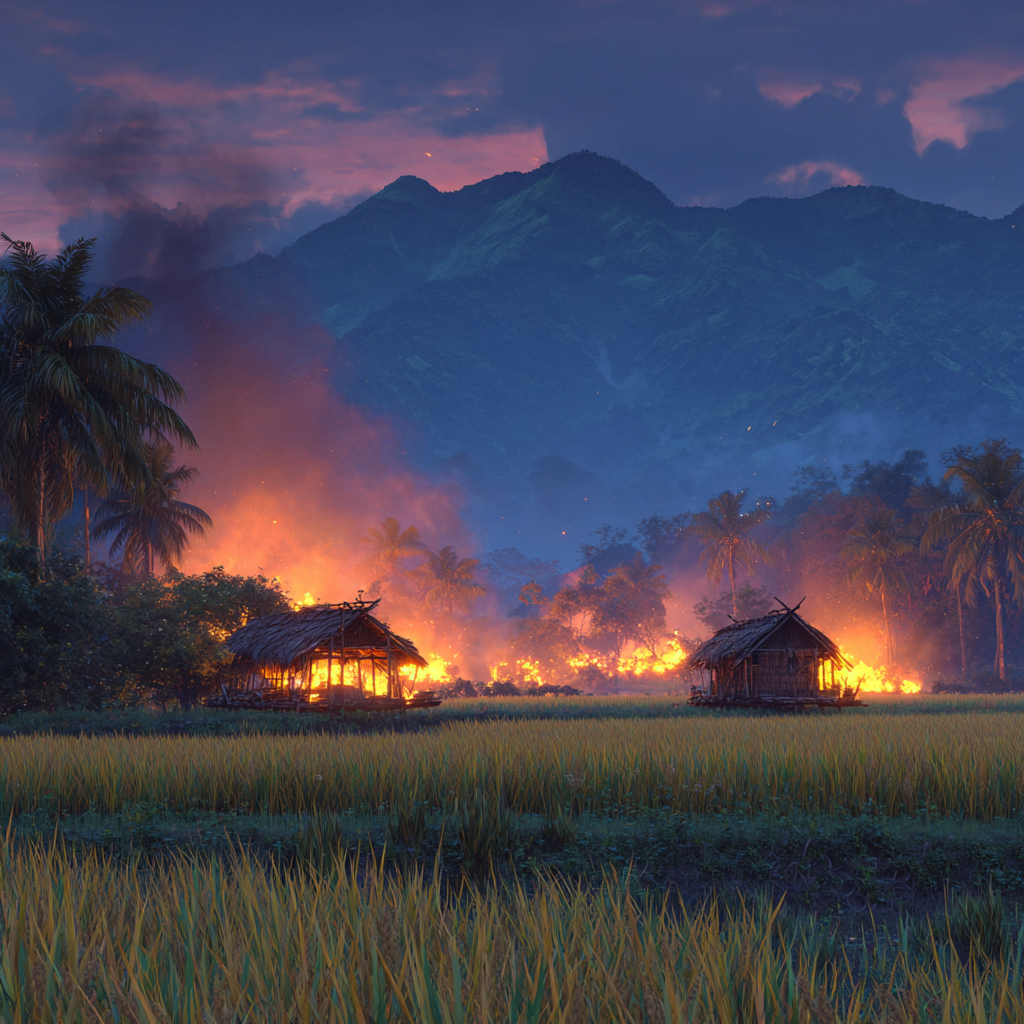
Legends say the villagers burned their own grain to prevent it from falling into the hands of the invading Siamese forces. However, the land was said to have never truly recovered for decades afterward.
3. No Agricultural Prosperity
After the fires and invasions, crops struggled to grow in Langkawi’s soil. Paddy fields, once a symbol of life, refused to flourish. Coconut trees aged without yield, and even fishermen claimed that the sea gave less than it once did.
4. Mass Displacement of Villages
Hardship forced many villagers to leave the island, leaving behind empty homes and abandoned settlements.
5. A Long Era of Suffering
Generation after generation endured prolonged hardship, carrying the emotional weight of a tragedy no one witnessed, yet all of them inherited.
6. Stagnant Development in Langkawi
While neighbouring islands and regions prospered through trade and colonial influence, Langkawi remained strangely stagnant. No ports rose to prominence, and no towns expanded. It was an island spoken of often, yet frozen in progress.
7. The Mahsuri Curse Lasted Exactly 7 Generations
Perhaps the most unsettling part of all was the eerie precision of the curse, lasting exactly seven generations, not less, not more. It felt like an invisible countdown, believed by all even though no one could see it.
8. A Sudden Boom After 7 Generations
When the seventh generation passed, Langkawi finally began to bloom. Not through agriculture, but through tourism. Roads were built, towns expanded, hotels rose, and the island opened its gates to the world. The curse had ended, just as the legend foretold.
9. ‘Makam Mahsuri’ Became a Magnet
Even during the island’s darkest years, the ‘Makam Mahsuri’ (Mahsuri’s tomb) remained protected, revered, and feared. Her grave became a symbol of the island, signifying that innocence had once bled there, and that her final words reshaped Langkawi’s destiny.
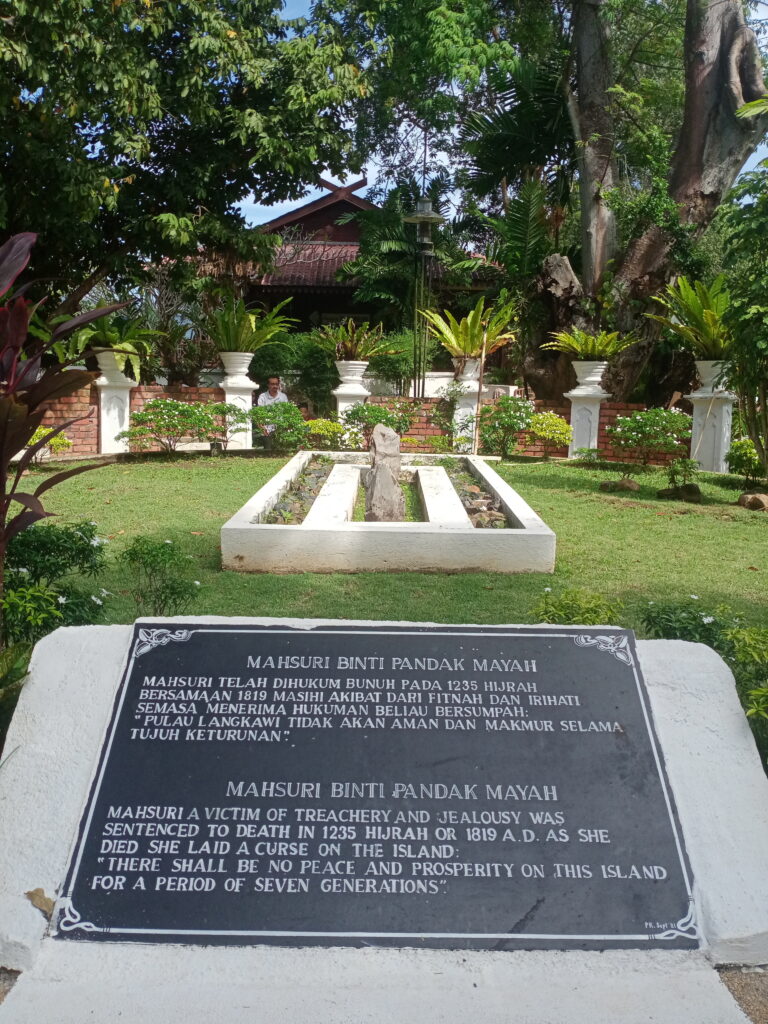
This remarkable tale carries deep meaning for the people of Langkawi. It reminds them that injustice is not just a wrongdoing, it is a sin that can echo through bloodlines and memory for generations.
There are more mysteries and encounters surrounding the legend of ‘Makam Mahsuri’ that will be explored in a future post. Until then, stay tuned!
If you are interested in Southeast Asian myths, read 7 Hidden Mysteries of Trowulan in Southeast Asia that will blow your mind!


Leave a Reply to Rubeshan Cancel reply