
The Penanggalan Myth
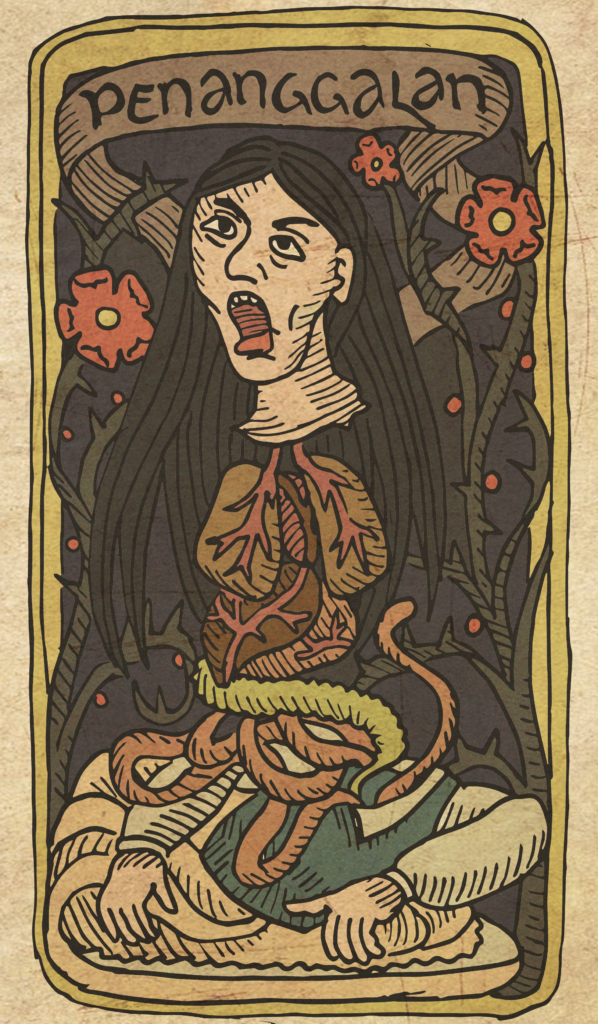
When I was a little kid, I read an article on the penanggalan legend in Southeast Asia in one of those dodgy mystical books that were popular in Malaysia at the time. It described a ghost whose head floats through the night, with its entrails hanging beneath it. And when it laughs, if the sound seems near, it means it is actually far away, and when it sounds far, it is already very near.
This truly freaked me out.
Every evening, after playing football in the field, I would walk home constantly looking over my shoulder, half-expecting to see something hovering above the trees.
This is the Penanggalan legend in Southeast Asia, one of the most chilling and widespread myths in the region.
This legend appears consistently throughout Laos, Cambodia, Thailand, Malaysia, Indonesia, and the Philippines.
Among its many names:
- Penanggalan (Malaysia & Indonesia)
- Balan-balan (Malaysia & Indonesia)
- Krasue (Thailand)
- Kasu (Laos)
- Manananggal (Philippines)
- Palasik (Sumatra)
- Leyak (Bali)
- Ma Lai (Vietnam)
- Ahp (Cambodia)
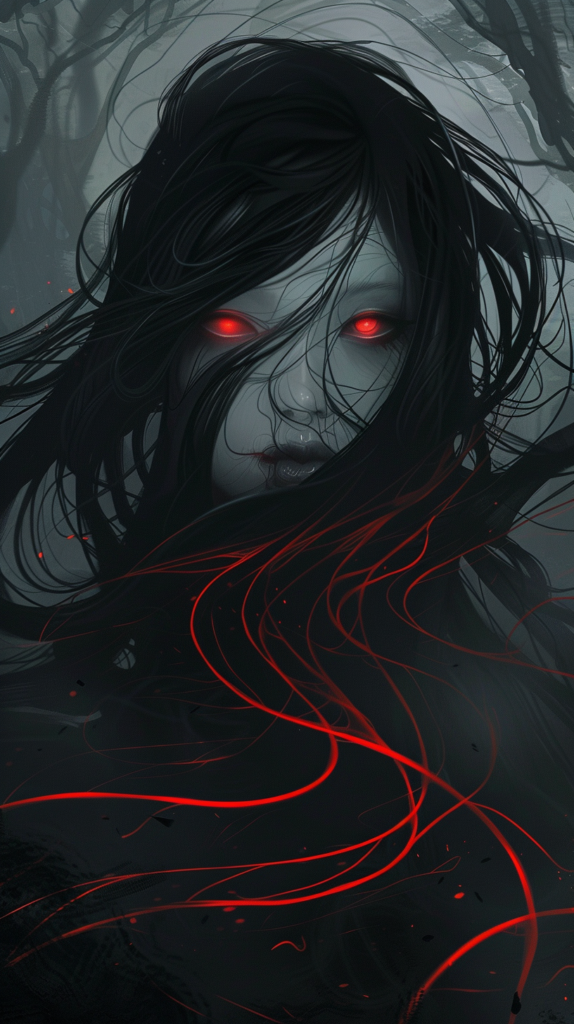
Some say it is a ghost. Others claim it is a woman who practices black magic, meditating while submerged in a vat of vinegar. At night, her head, along with her entrails, detaches from her body, and she goes hunting for pregnant women and newborn children.
Imagine a young mother holding her baby at night…and suddenly, the smell of vinegar fills the air.
That is when you know something is near.
Origin of the Penanggalan Legend in Southeast Asia
To look at the origin of the penanggalan word, it comes from the Malay root word ‘tanggal’, meaning “to detach” or “to remove”.
The name itself explains the horror.
By day, she appears as an ordinary woman. By night, her head detaches from her body and flies into the darkness, her organs trailing beneath her. The body remains hidden, often soaking in vinegar to preserve it while the head hunts.
According to the legend, this curse lasts forever. Every night, her head separates from her body, and she must find blood to survive. The obsession with childbirth is one of the most disturbing elements of this myth.
Houses in Southeast Asia were built on stilts, with wooden walls and small gaps in the floorboards. Childbirth was extremely dangerous in those times. Many women and infants did not survive. When complications arose like infections, haemorrhages, and unexplained deaths, people searched for answers.
And the Penanggalan became that answer.
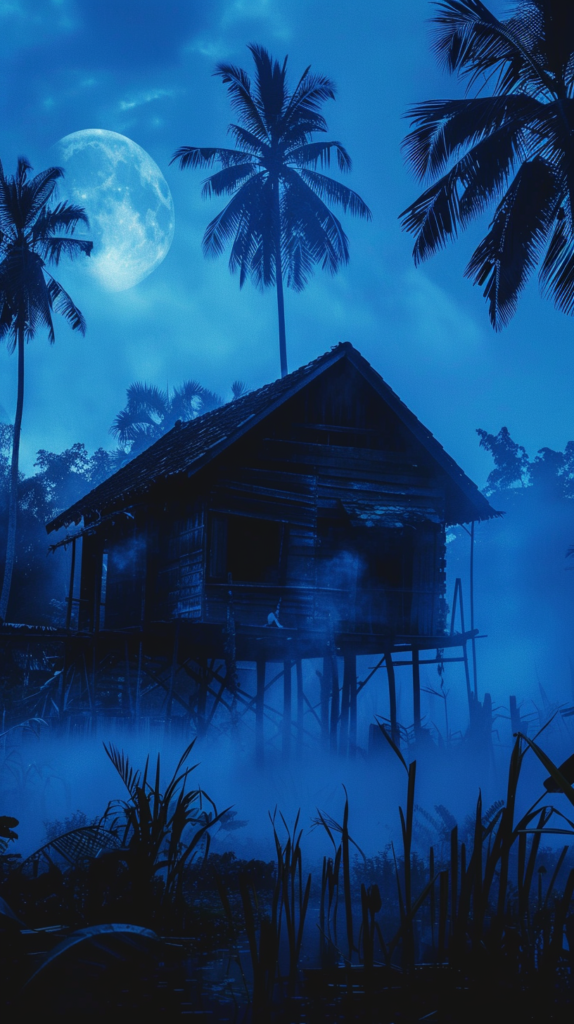
It was said she would appear whenever there was childbirth. She could slip through windows or small openings in the floorboards. To protect mothers and babies, families would place nails along the windowsills and hang sharp objects near entrances. Thorns were also scattered around the house. The reason for this is simple, her exposed entrails would get caught and torn, stopping her from attacking.
Penanggalan vs Manananggal
One of the most searched comparisons today is the difference between these 2 entities, Penanggalan vs Manananggal.
In the Philippines, the Manananggal is similar…but not identical.
While the Penanggalan detaches only her head, the Manananggal splits at the torso. The upper half of her body grows bat-like wings and flies into the night, leaving the lower half behind.
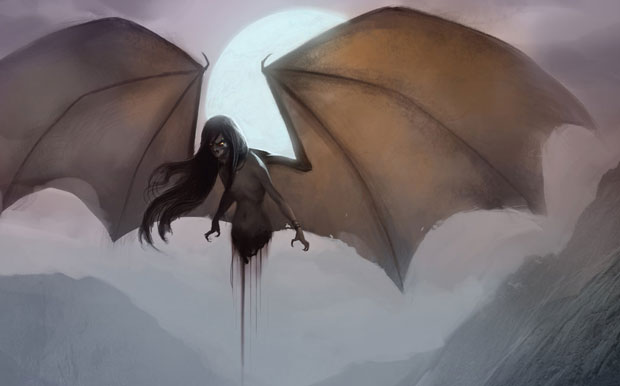
They may look different, but the belief is the same, both target pregnant women, both hunt newborns, and both are female figures associated with dark magic.
Krasue and Other Flying Head Ghosts
The flying head ghosts are consistent across the region. In Thailand, she is known as the Krasue, perhaps the most famous version today is due to Thai horror films. The Krasue also appears as a floating female head with glowing organs beneath it.

In Cambodia, she is called the Ahp.
In Laos, she is known as the Kasu.
Across Indonesia, variants such as the Palasik and Leyak exist, each with slight differences but with the same disturbing imagery.
This raises an interesting question.
Why is the flying head myth so widespread across Southeast Asia?
These cultures developed separately in many ways, yet the image of a woman whose head detached and hunts at night persists across borders.
Why the Myth Spread Across Southeast Asia?
As this myth appears across Southeast Asia, it is believed to be very old, possibly predating modern national borders.
The environment may offer some clues.
The tropical climate, dense forests, and stilted wooden houses created physical conditions where strange sounds and unexplained illnesses were common. Night in rural villages was pitch black, medical knowledge was limited, and childbirth mortality was high.
When tragedy struck, people needed explanations, and the Penanggalan provided one.
It also reflected deeper anxieties, fear of the night, fear of blood, and fear of women who practiced witchcraft.
There is even a story from colonial Malaya of a man who suspected his two wives were Penanggalan and they were of different skin tones. One night, after their heads detached and their bodies were left soaking in vinegar, he switched their bodies. When the heads returned and reattached to the wrong bodies, their mismatched skin tones exposed them.
The next day, the villages knew, and they were punished.
Legends, like this are not just meant to frighten, they are cultural mirrors. Sometimes, the scariest monsters are the ones we create to explain what we do not understand.
So tonight, if you hear something brushing against your window…
Do not look up!
If you are interested in Southeast Asian myths and legends, be sure to read Tikbalang: The Twisted Forest Guardian and Trickster of the Philippine Jungles
Leave a Reply