

The Malin Kundang story is heard across Southeast Asia. The sea in this region does more than connect lands, it carries stories of warnings, lessons, and echoes of the past. For centuries, sailors, villagers, and storytellers have passed down tales shaped by waves and memory. Among the most haunting stories in the Malay archipelago are three strikingly similar legends: The Malin Kundang story, Jong Batu Nakhoda Manis, and Si Tanggang.
Though they originate from different countries, Indonesia, Brunei, and Malaysia, they share a chilling theme, one that echoes throughout the ancestral Malay world. It tells the stories of a child who forgets their roots and pays a terrible price. These stories are not mere entertainment. They are moral warnings, deeply embedded in culture, and remembered through physical landmarks that still exist today.
These are not just stories, they are cultural warnings carved into stone…quite literally.
Malin Kundang Story
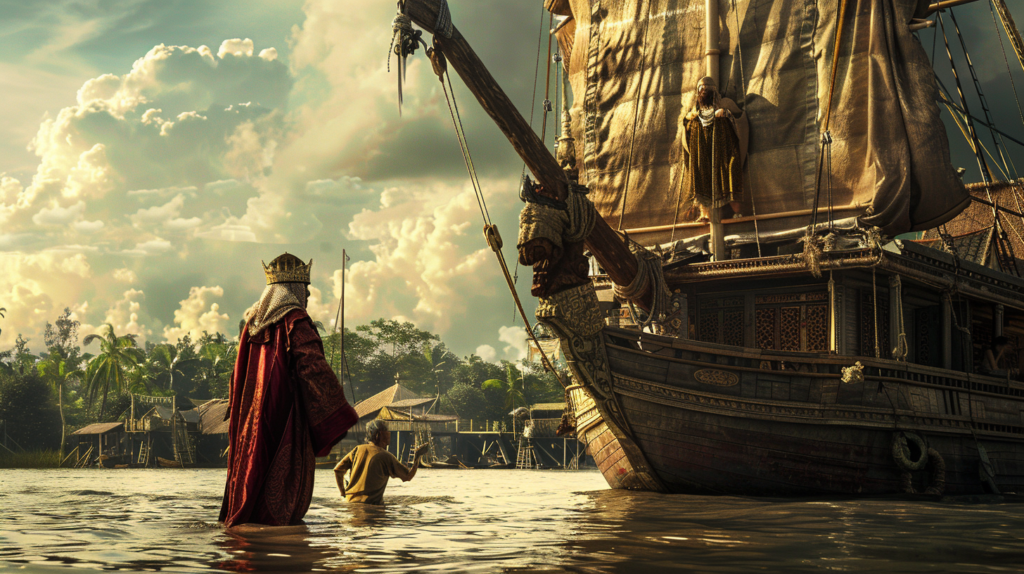
Perhaps one of the most famous stories of the Malay world is the tale of the Malin Kundang story, which comes from West Sumatra. It is a tale often retold across generations, not just for its drama, but for its emotional weight.
Malin Kundang was born into poverty and raised by his single mother. Determined to change his fate, he left his mother behind to seek fortune and set out to sea. Years later, he returned home as a wealthy man, married to a noblewoman whom he brought along with him.
When his mother recognised him and approached him with tears of joy, Malin felt ashamed…
Ashamed of his poor background and how it would reflect on him in front of other wealthy merchants. Fearing embarrassment, he denied his own mother and treated her with cruelty.
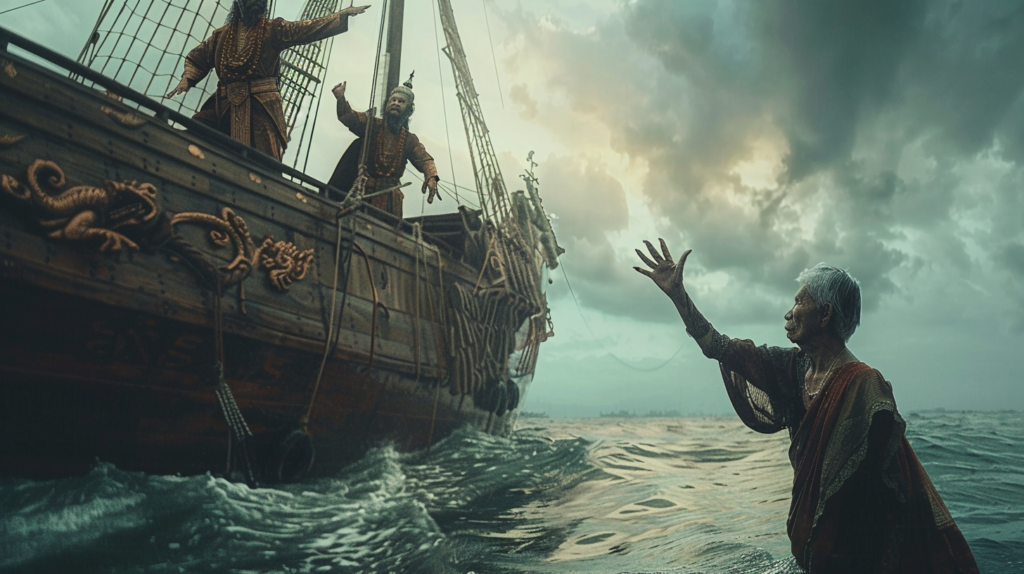
His mother, who had waited so long and had been overjoyed to see him, was devastated. In her heartbreak, she did something a mother would never wish to do, she cursed him.
Not long after Malin Kundang departed again, the sea turned violent. Dark clouds gathered, waves crashed against his ship, and lightning split the sky. In a moment of divine retribution, a storm descended. His ship was destroyed, and Malin himself was turned into stone, forever frozen in a kneeling position of regret.
Even today, visitors to Air Manis Beach claim to see the stone figure believed to be Malin Kundang.

Subscribe to our YouTube channel for Southeast Asian Lore videos!
Si Tanggang “Anak Derhaka”
A nearly identical legend exists in Malaysia, known as the story of Si Tanggang, with the “anak derhaka” tagline often added to describe his disobedience. It is one of the country’s most famous folktales and if often taught in schools as a lesson on filial piety.
Born into poverty, Si Tanggang left his humble village to seek a better life. Over time, he rose to become a wealthy and respected sailor. One day, his ship docked near his hometown. HIs mother, who had waited years for his return, eagerly approached him, hoping to embrace her son.
But instead of welcoming her, Si Tanggang felt ashamed. In front of his crew, he rejected his mother and denied knowing her.
Crushed, she raised her hands to the sky and uttered a curse. Almost instantly, the sea turned violent, thunder cracked, waves surged, and Si Tanggang’s ship was turned into stone, along with him. His story is often told to children as “Si Tanggang anak derhaka”.
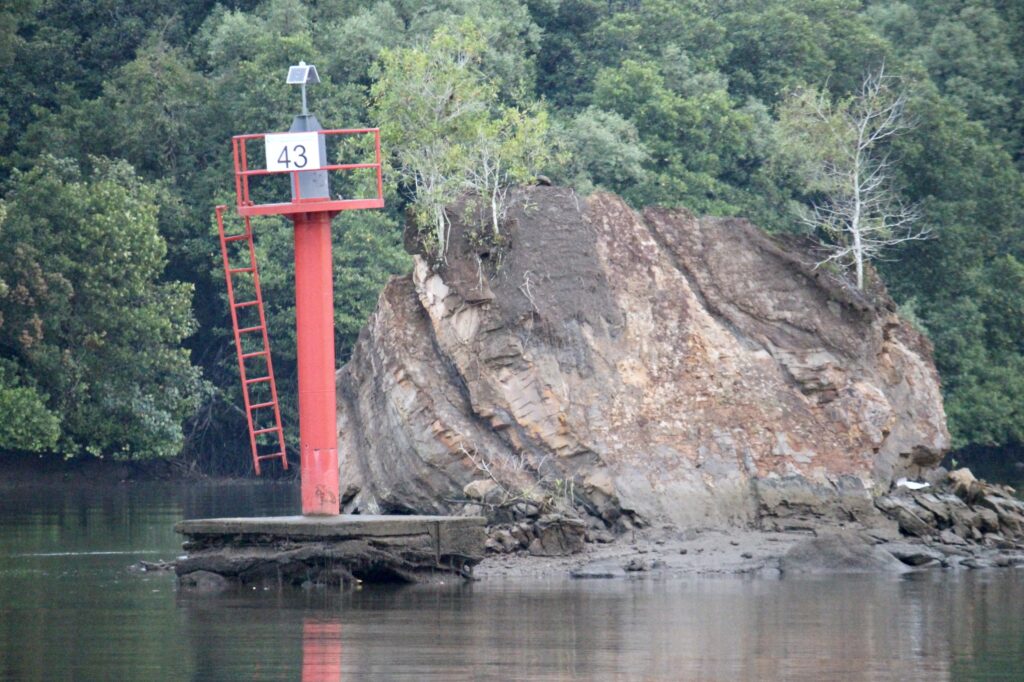
To this day, there is a rock formation in Malaysia said to resemble a ship frozen in time.

Jong Batu Nakhoda Manis
In Bruneian folklore, Nakhoda Manis was once a poor boy who left home in search of wealth. Through determination and luck, he became a successful merchant captain.
Years later, his ship returned to Brunei. His aging mother, overjoyed, rushed to meet him. But success has changed him. Ashamed of his humble origins, Nakhoda Manis denied his own mother in public, rejecting her as a beggar.
Heartbroken, she prayed, not for revenge, but for justice.
As his ship sailed away, a violent storm suddenly formed. Lighting struck, waves roared, and in a moment, the entire ship turned to stone. Today, locals believe the rock formation known as Jong Batu is the petrified remains of that cursed vessel.
Why These Stories Matter
What makes these three legends so powerful is not just their similarity, but their universal message. Across different cultures, languages, and regions, they convey the same enduring truth: honour your parents, remain humble, and never forget where you came from.
These stories were not only meant to entertain but to guide behaviour, install values, and serve as warnings against arrogance and ingratitude. In today’s fast paced world, where success can sometimes distance people from their roots, these lessons feel more relevant than ever.
While the idea of ships turning into stone may belong to legend, the consequences of pride and betrayal are very real. And perhaps that is why these stories continue to endure, because they reflect something deeply human, something timeless.

Beyond their moral lessons, these legends also reveal something important about the shared cultural identity of Southeast Asia. Despite being separated by modern borders, the striking similarities between these stories suggest a common heritage, one shaped by maritime trade, migration, and centuries of storytelling.
The seas that connected these regions were not just routes for goods and people, but also for ideas, beliefs, and values. Over time, these stories evolved in different lands, yet retained their core message.
They also highlight the deep respect for family that exists across the Malay Archipelago. In many Southeast Asian cultures, the bond between parent and child is considered sacred, and to break that bond is seen as one of the gravest moral failures.
The idea of a mother’s curse carries such weight precisely because it represents a complete collapse of that relationship, something both feared and condemned.
For more Southeast Asian stories, read Phi Kong Koi Story: The Terrifying One-Legged Ghost of Laos & Thailand
Leave a Reply