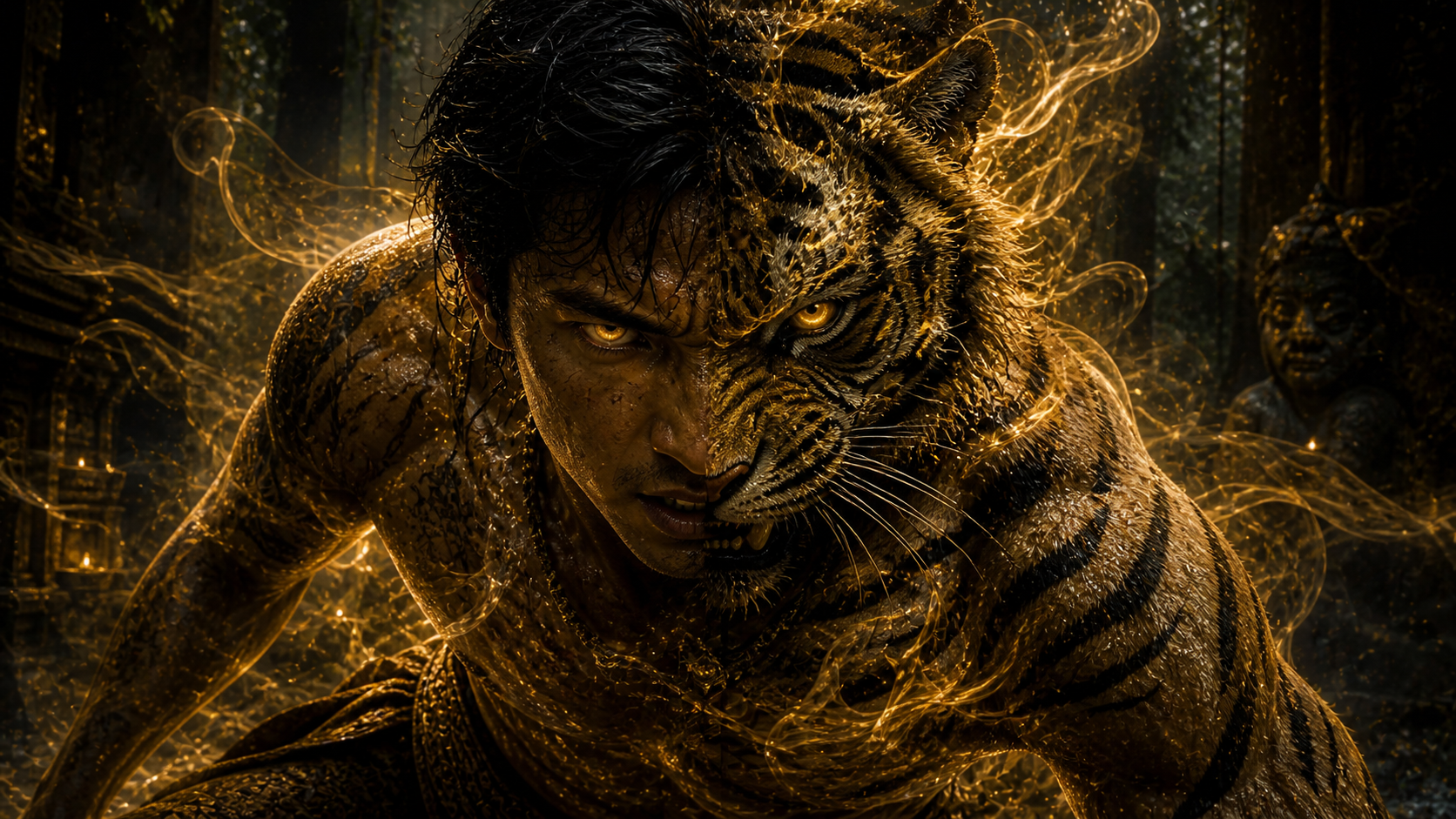
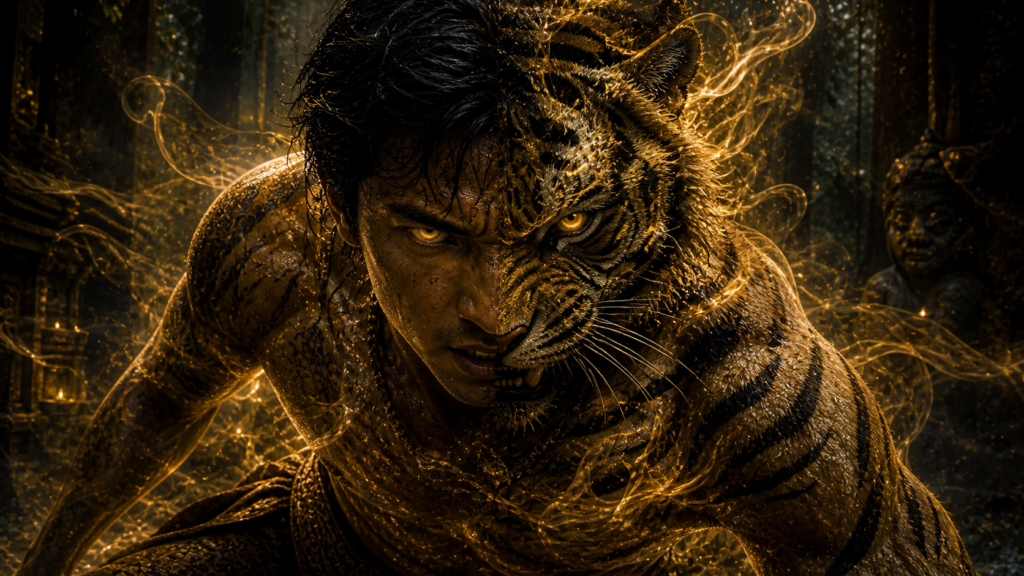
There is a story shared by almost all countries in Southeast Asia, the story of the weretiger. Humans who can change into tigers at will. Over the years, there have been many sightings, with countless people claiming to have seen them. This story is similar to the Western concept of werewolves.
The idea of humans turning into animals is not unique to one culture or region. From European werewolves to African werehyenas, it appears across the world. These legends are usually associated with terrifying animals native to each region, and unsurprisingly, in Southeast Asia, it is the magnificent tiger.
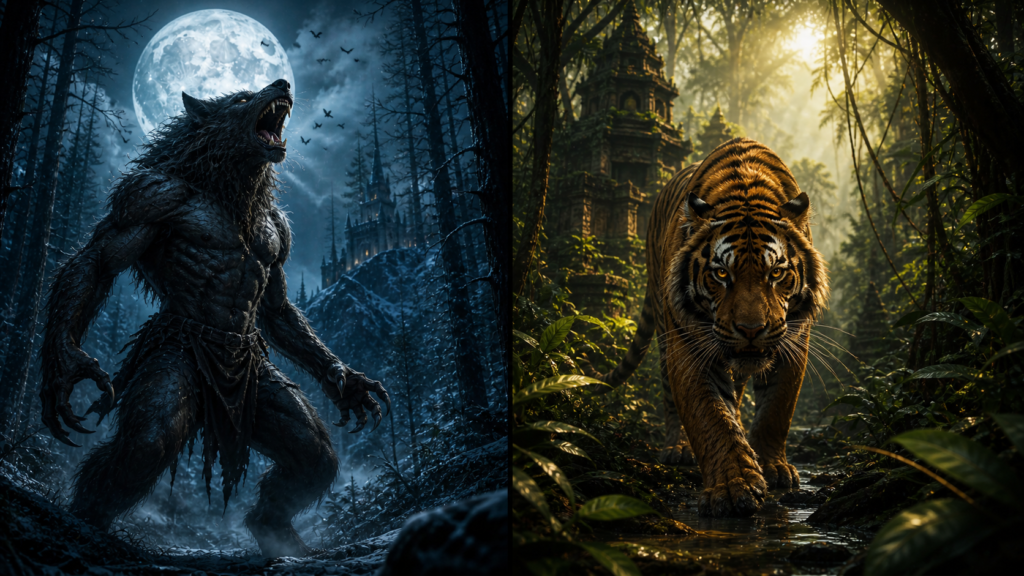
In weretiger mythology, these beings are not always cursed like werewolves. Oftentimes, they are powerful shamans, warriors, or individuals who have mastered secret or forbidden knowledge, almost always involving making a pact with the ‘jinn’, which literally means a genie, but not the Aladdin kind, more like unseen demons.
Unlike Western werewolves, a weretiger is often portrayed as intelligent, controlled, and deeply tied to spiritual forces. This distinction matters because, in Southeast Asian belief systems, especially those influenced by animism and mysticism, the tiger is not merely a wild and dangerous animal. It is seen as a guardian, an executioner, a protector, or even a god.
Weretiger in Southeast Asia: A Widespread Fear Across Cultures
The concept of the weretiger in Southeast Asia is found across multiple countries, each with its own variation of the legend.
In Malaysia and Indonesia, it is known as “Harimau Jadian“. These are humans who can transform into tigers through rituals, inherited abilities, or, in many well-known cases, through dark or black magic.
Stories often depict individuals who disappear into the forest and return with glowing eyes, unusual strength, or an unsettling aura surrounding them. However, there have also been accounts where people claim that these weretigers actually protect villagers. In contrast, other reports say they prey on humans, as commonly described in Thailand.
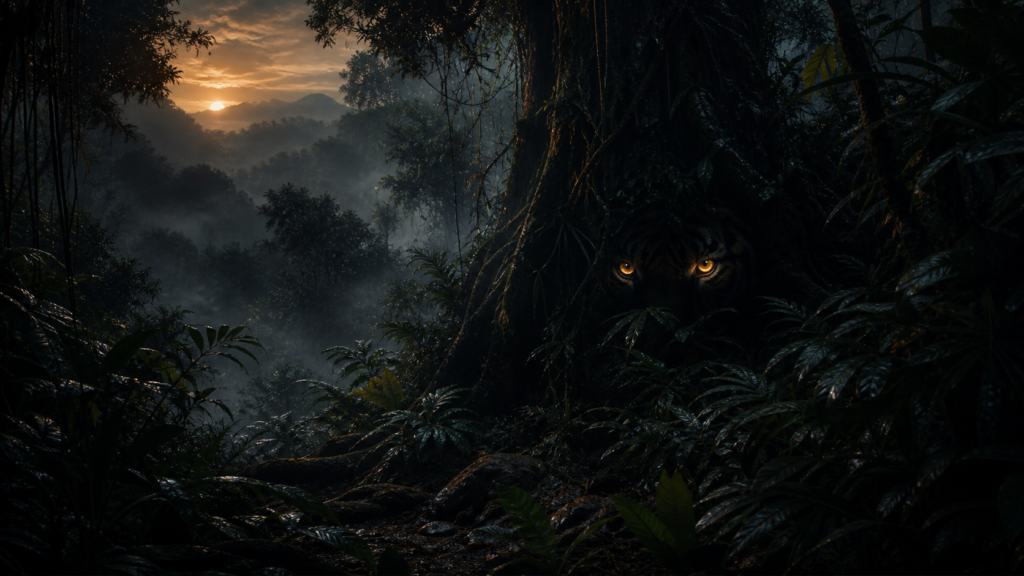
In Thailand, weretigers are known as “Suea Saming“. The legend becomes even darker in this region. Suea Saming are feared Southeast Asian shapeshifter tigers. Unlike in other regions, they are often portrayed as cursed entities…humans who have permanently lost their human nature after consuming too much raw flesh. These creatures are said to lure victims by mimicking human voices before striking.
The Weretiger Legend in Malaysia: The Story of Dato’ Paroi
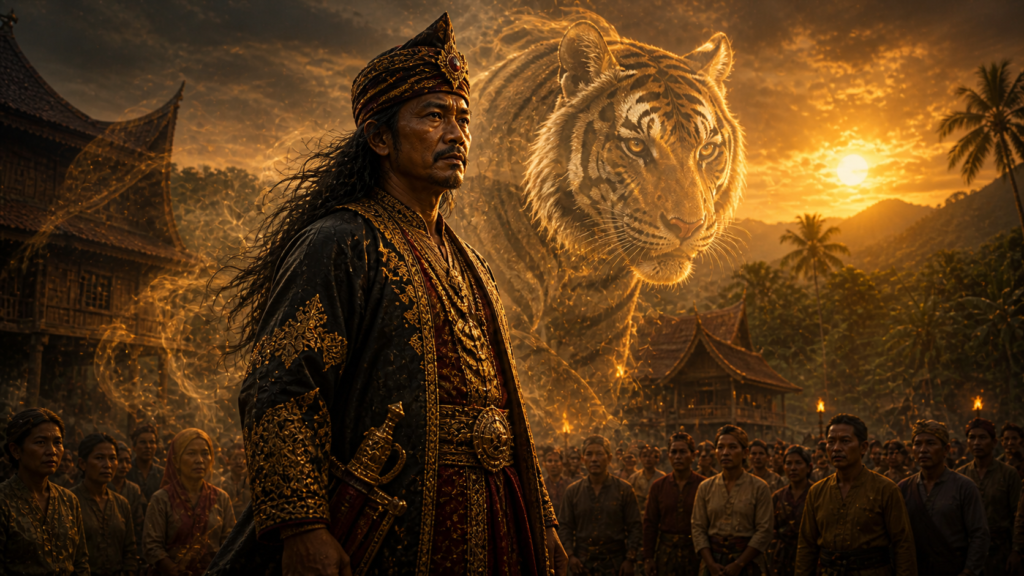
Among the many weretiger legends in Malaysia, one name particularly stands out, Dato’ Paroi.
Dato’ Paroi is often described not as a monster, but as a man who possessed extraordinary spiritual abilities. According to folklore, he could transform into a tiger at will, using his power either to protect or to punish.
Some versions of the story suggest he used his abilities to defend his village from enemies. Others claim he became feared, as his sense of justice grew harsher and more unpredictable. What makes this legend compelling is its ambiguity, whether Dato’ Paroi was truly a people’s hero or something else entirely.
Even today, older generations in parts of Malaysia still speak of him with a mix of respect and fear.
Humans Turning Into Animals Myth: Why Tigers?
As mentioned earlier, out of all animals, the tiger dominates the landscape of humans turning into animals stories in Southeast Asia. The reason lies in both ecology and symbolism.
Tigers were once apex predators across the region (although it is tragic that species like the Javanese and Balinese tigers have gone extinct). They move silently through dense jungles, commanding both fear and respect. To ancient communities, they represented power beyond human control.
On top of that, tigers are seen as spiritual beings in many Southeast Asian cultures, a bridge between the physical and supernatural worlds, helping to explain the unknown within the dark and dense forests.
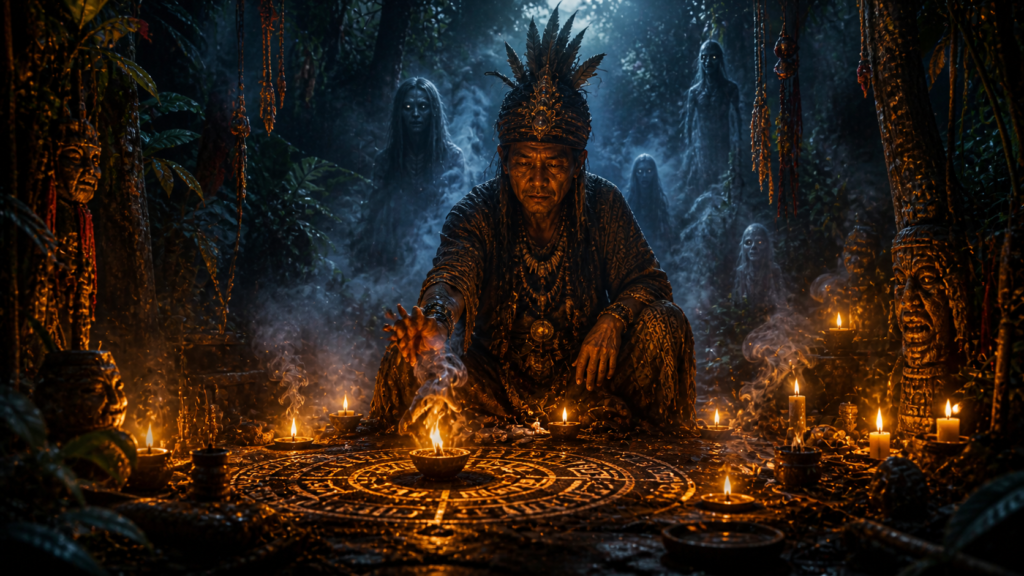
However, not all weretigers are depicted as protectors. Some stories, such as those from Thailand, describe them as cannibals. Others claim they make deals with dark spirits, sacrificing their humanity for power.
In certain regions, suspected weretigers were feared so deeply that entire communities avoided individuals believed to possess such abilities. There are even chilling accounts of people being accused of being weretigers after unexplained deaths or disappearances in villages.
There are also various accounts recorded by colonial officers such as Sir Hugh Clifford, Frank Swettenham, and Alexander Hamilton, among others. So whether these stories were born from superstition, fear, or something more remains unknown.
Modern Interpretations and Cultural Impact Of The Weretiger
Today, the weretiger myth in Southeast Asia remains widely known. It has inspired films, books, and online horror stories, especially in Malaysia and Indonesia. The legend of Harimau Jadian has even been adapted into modern cinema, blending traditional folklore with contemporary storytelling.
Beyond entertainment, these stories still carry cultural weight. They reflect the fear of the unknown, respect for nature, and symbolise something ancient
Although there is no scientific evidence to prove the existence of weretigers, their power lies in belief. Strongly associated with the Minangkabau people from Sumatra and the state of Negeri Sembilan in Malaysia, these legends have endured for generations and continue to instill fear in the hearts of many.
They reflect the rich mythology of Southeast Asia and, more importantly, the deep relationship between people and nature.
Comment below if you have had any encounters with the Harimau Jadian.
Read about the story of a mystical turtle and a sword Hoàn Kiếm Lake: Enchanting Secrets That Make it Hanoi’s Most Magical Escape and 3 Hidden Corners You Must Experience!
Follow us on Facebook!
Leave a Reply