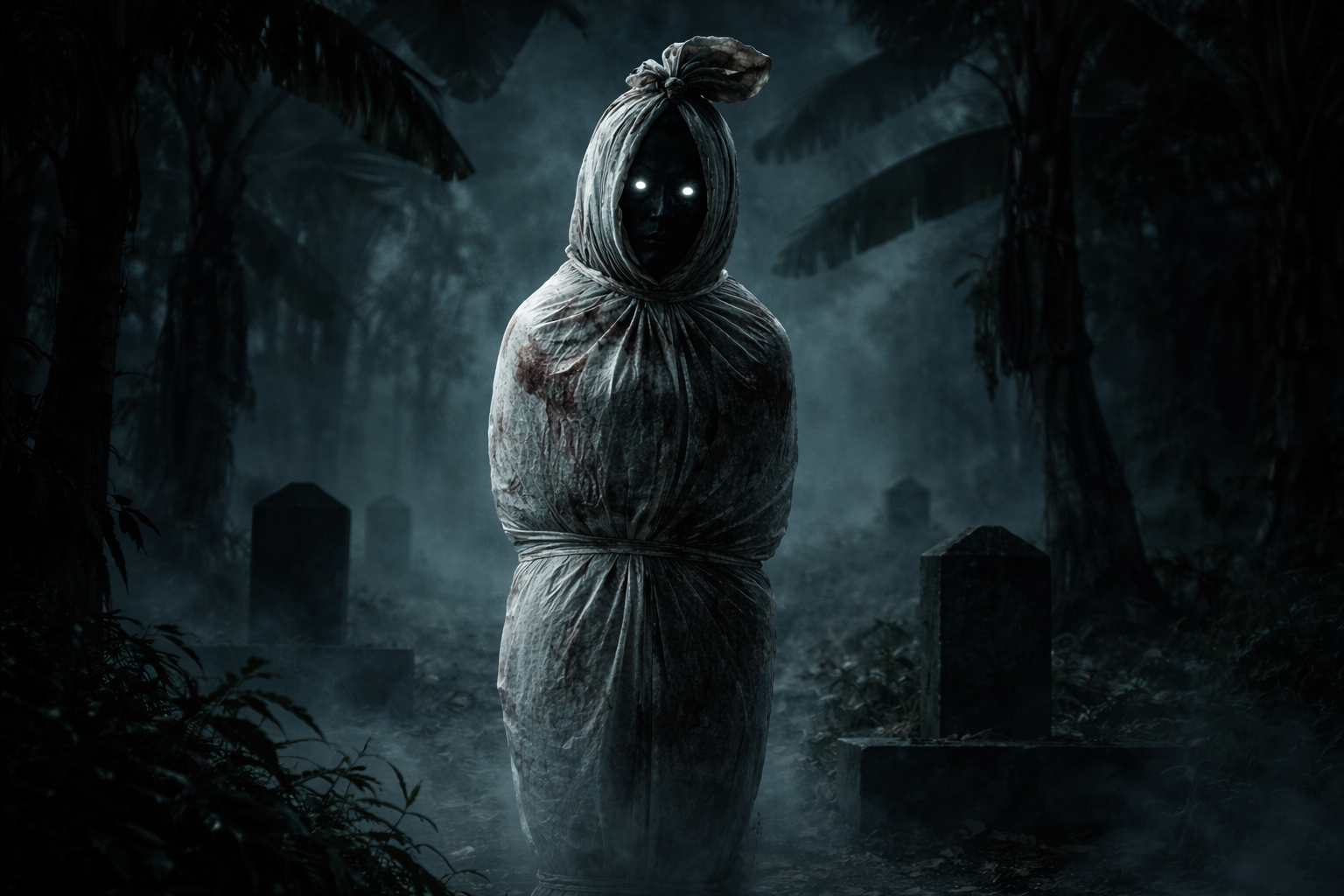
If you have explored Southeast Asian horror, one type of ghost almost always stands out, the Pocong. But what is a pocong ghost, and why does it remain one of the most feared spirits in Indonesia even today?
This article explores its origins, cultural meaning, and most importantly, deeply detailed real-life inspired encounters. If you’ve been searching for a complete pocong story in English, you’re about to experience some of the most chilling ones, including a story about a rare and terrifying pocong variant known as the Red Pocong.
What is a Pocong Ghost?
So it comes back to the main question, what is pocong in Indonesia? It is also found in Malaysia and Singapore as well.
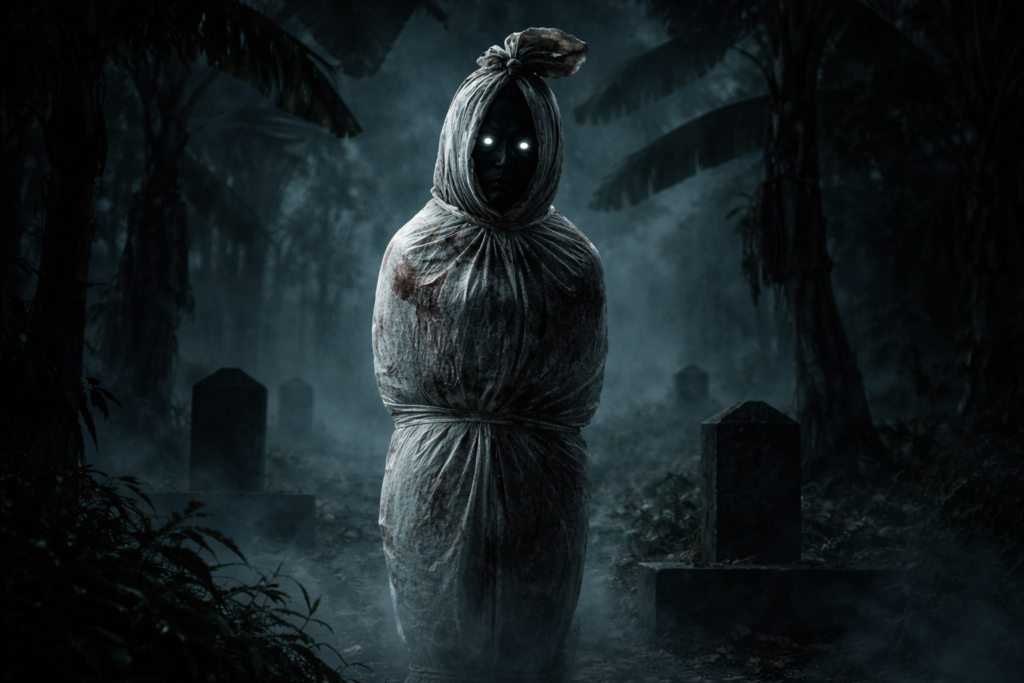
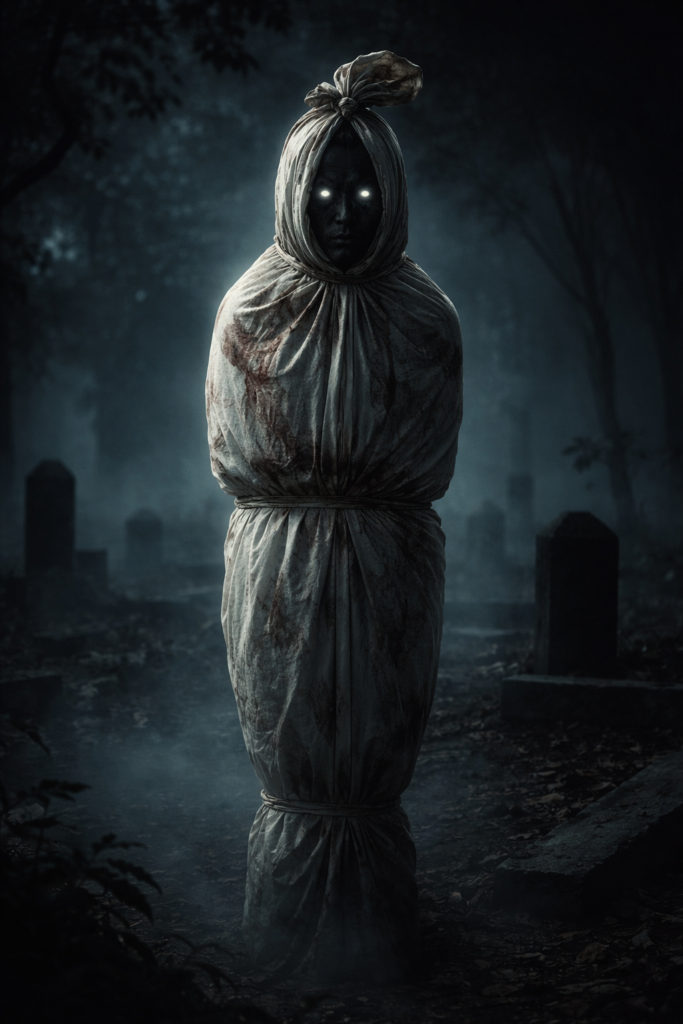
A pocong is believed to be the spirit of a deceased person trapped inside their burial shroud. In Islamic burial practices, the dead are wrapped in a white cloth and tied at the head, neck, and feet before burial. According to folklore, the ties must be released after burial. Or else, the soul becomes restless, and returns as a Pocong, bound and unable to walk.
That is why the Pocong is often seen hopping, gliding, or appearing suddenly in the darkness.
The Origin of Pocong Ghost
The origin of pocong ghost is deeply rooted in the spiritual beliefs about death and the afterlife.
Many Indonesians believe that the soul lingers briefly after death. If proper rituals are not completed, the spirit may remain trapped between worlds. The Pocong is seen as a manifestation of this unfinished journey.
In some traditions, it is also believed that Pocong appearances are warnings, a sign that something was not done correctly, and that particular spirit is still seeking a closure.
Pocong, Real or Fake?
The debate whether pocong, real or fake, continues even until today. Some people believe strongly in its existence, citing consistent sightings near cemeteries and rural areas. Others point out that many viral sightings are staged pranks.
Still, the persistence of similar stories across generations makes one thing clear: The fear of the Pocong is very real, whether the ghost itself is or not.
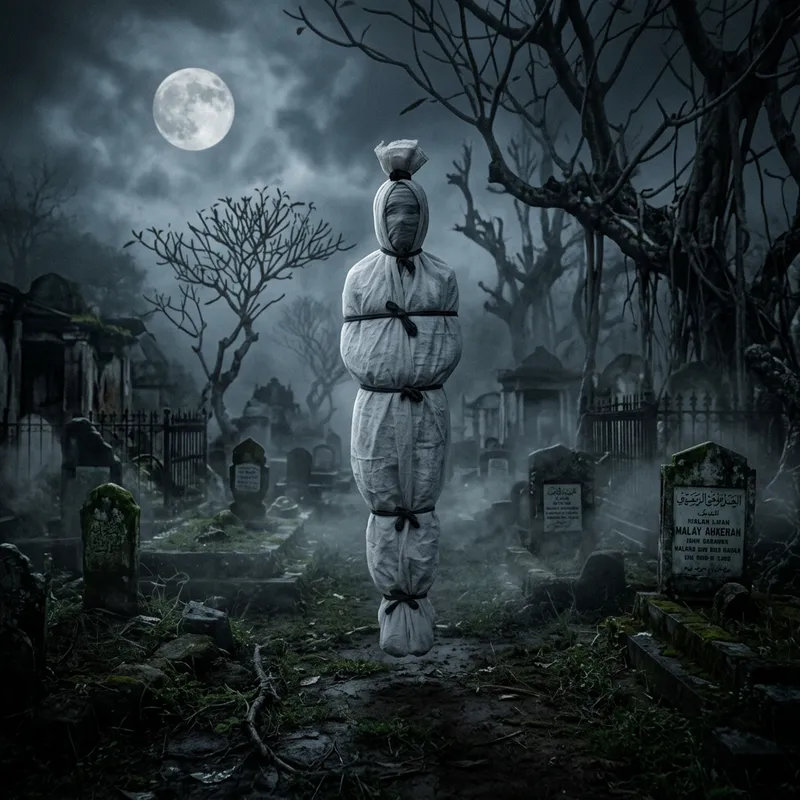
Pocong Story in English (3 Encounters & Legends)
- The Plastic-Wrapped Pocong
This chilling tale comes from a tragic and violent past.
A pregnant woman was brutally murdered, leaving her body severely damaged. Because of the condition of her remains, the villagers wrapped her first in plastic before covering her with the traditional burial cloth.
Soon after her burial, strange disturbances began. Dogs howled endlessly at night, a strange, suffocating smell filled the air. People started to avoid the cemetery entirely. Then, came the sightings.
Witnesses reported seeing a Pocong, but unlike any other. Beneath the white cloth, something glistened unnaturally.
“I heard a crinkling sound…like plastic being squeezed,” one man recalled.
The figure stood motionless near banana trees, its presence heavy and oppressive. Some villagers later reported having nightmares of a woman crying, begging for help.
Many believed her soul was trapped not just by ritual, but by the trauma of her death, and she is seeking for a release from the plastic packaging that bounds her.
- The Andong Pocong
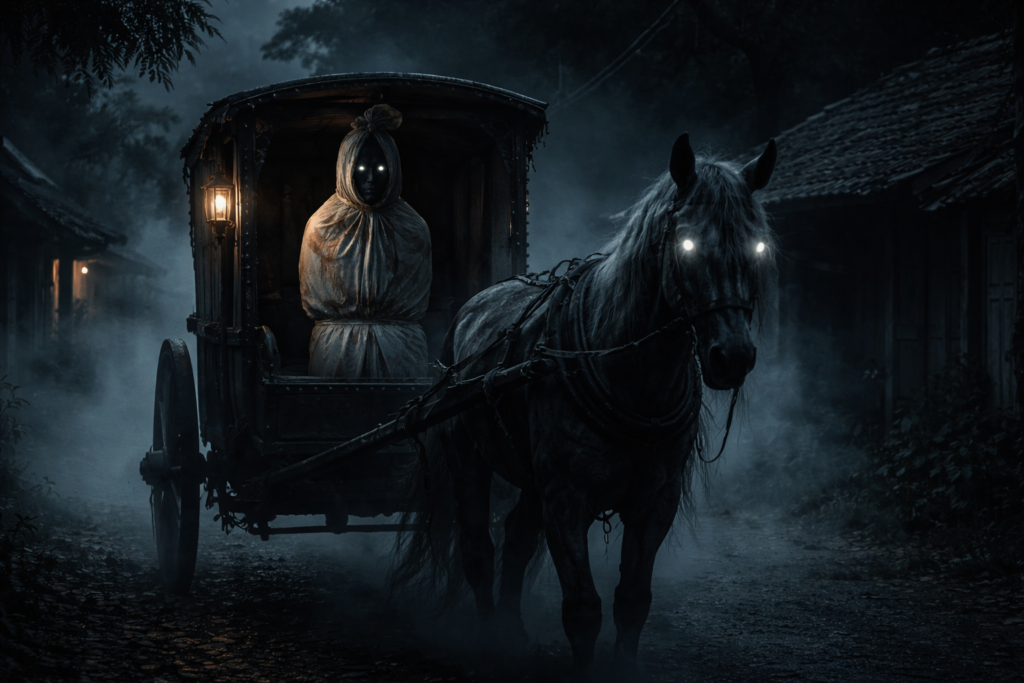
In East Java, a haunting legend involves a ghostly carriage and a Pocong that rides within it.
A couple who drove a traditional horse carriage (andong) died in a sudden accident one rainy night. They were buried, and life slowly returned to normal, until the sounds began.
Late at night, villagers heard hooves striking the ground, wooden wheels creaking, and a carriage moving through empty streets. Those who dared to look saw something terrifying.
A carriage moving slowly, pulled by a lifeless horse…and inside, a Pocong, sitting upright.
“ It stopped outside my house,” one witness said. “I heard knocking…like it wanted someone to open the door.”
No one every dared to open the door. Some who saw it later fell ill, suffering fevers and vivid nightmares. The road where the accident happened is now avoided after dark.
- The Red Pocong (Pocong Merah)
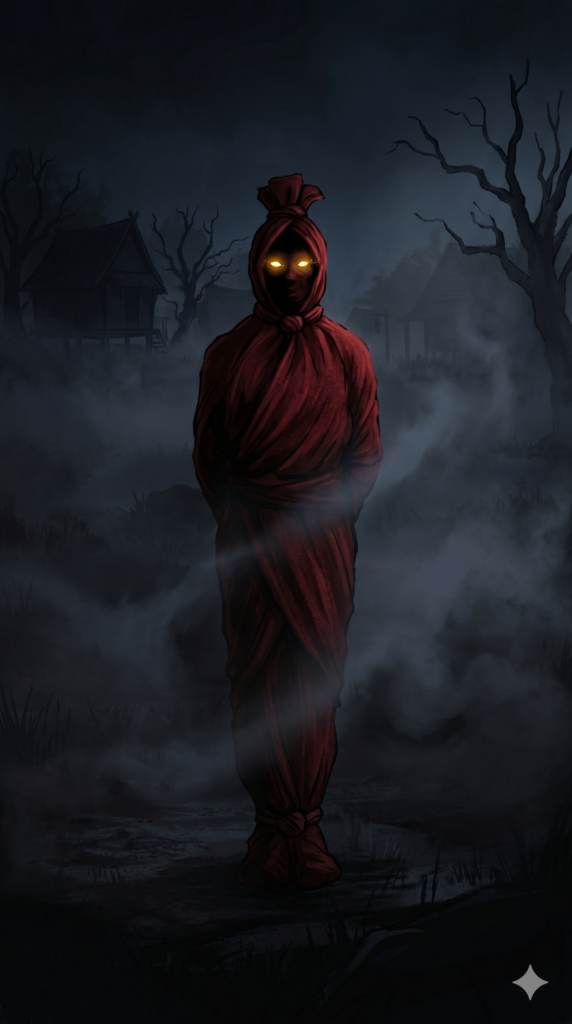
Among all of the known Pocong variations, the Red Pocong is one of the rarest, and most feared. Unlike the typical white shroud, this Pocong is said to be wrapped in blood-stained or entirely red cloth. It is often associated with violent deaths, black magic, or vengeful spirits.
One story comes from a rural village where a man was rumoured to be practicing dark rituals. After his sudden death, villagers then began noticing strange occurrences, livestock found dead without wounds, shadows moving unnaturally at dusk, and a constant feeling of being watched.
Then, someone saw it…
A pocong, but strangely, it was not white. It was red.
Deep crimson, as if soaked in blood. Its movements were different too. Faster and more aggressive. It did not hop slowly, but it lunged.
Unlike other Pocong sightings, this one was often linked to misfortune. Those who claimed to see the red pocong often experienced sudden illness, disturbing hallucinations, and unexplained bad luck.
In some beliefs, the red pocong is not just a trapped soul, but something darker, possibly influenced by black magic or unresolved rage. Even among believers, this version is rarely spoken about openly.
Why The Pocong Still Haunts Modern Culture
The Pocong remains one of Southeast Asia’s most iconic ghosts because it feels real. It is tied to actual burial practices, deep spiritual beliefs, and the universal fears of death and the unknown. From films to viral videos, its presence continues to evolve, keeping the legend alive for new generations.
Let us know in the comments if you have any chilling stories of your own.
If you are interested in Southeast Asian Folklore, read Tikbalang: The Twisted Forest Guardian and Trickster of the Philippine Jungles
Follow us on Youtube!
Leave a Reply