
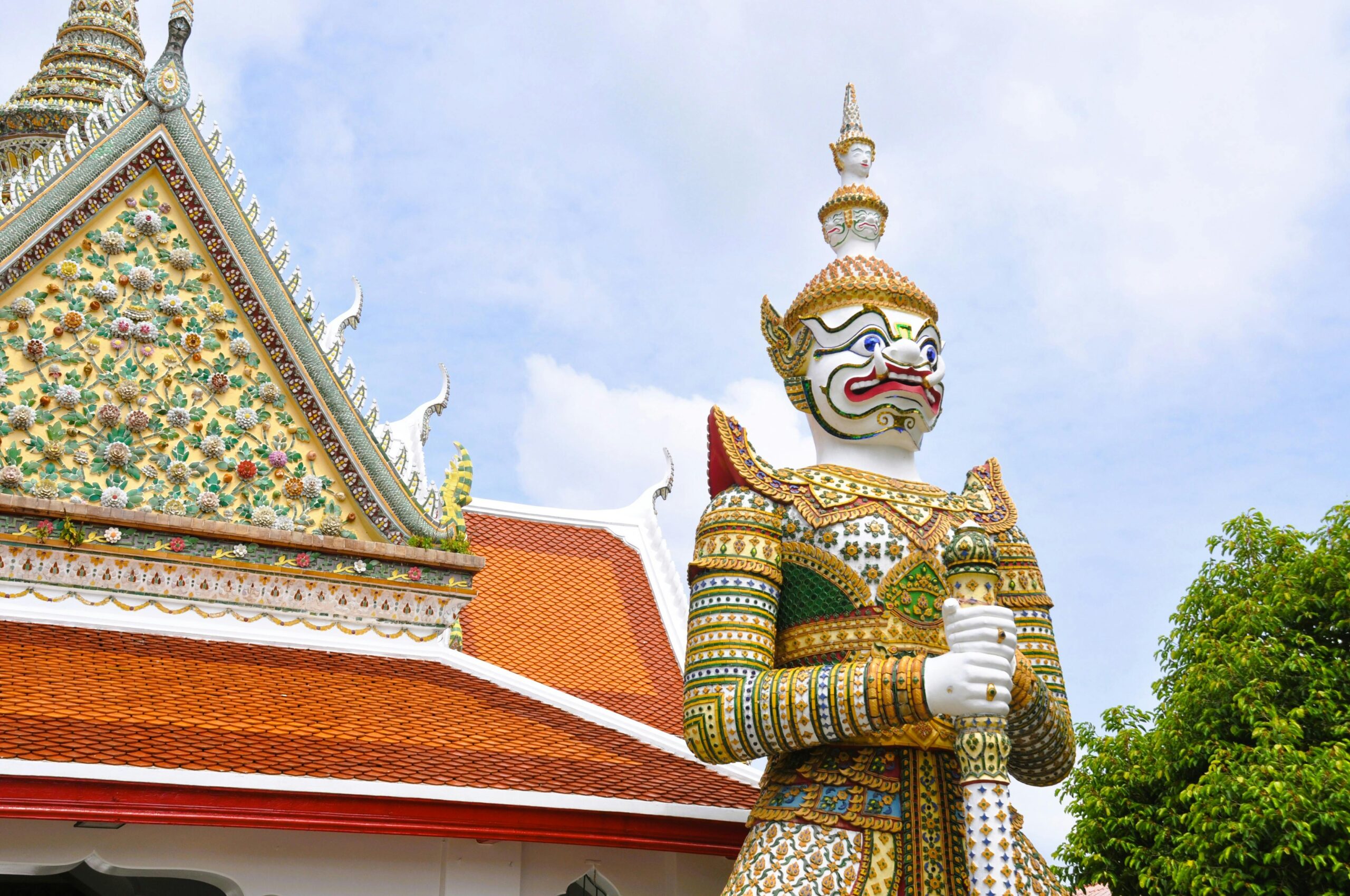
Mythical Giants Who Watch Over the Temple of Dawn in Bangkok
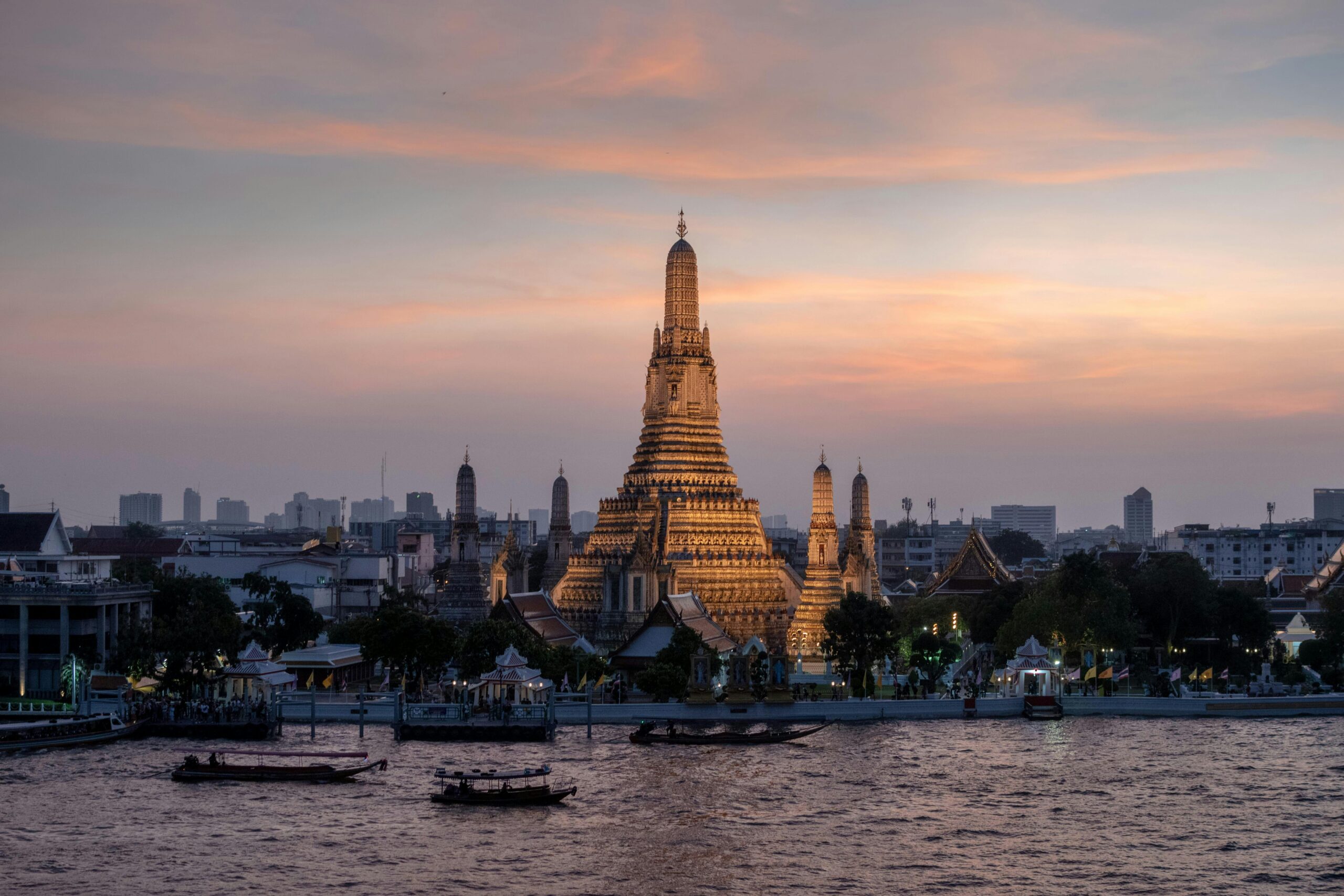
Standing on the banks of the Chao Praya River, looking at the colossal beauty of Wat Arun is easily one of the must-do experiences in Bangkok, Thailand. The temple exudes an aura that defies explanation. Perhaps because it was once the home of the Emerald Buddha, fragments of that divine energy are believed to linger here, rooted in the temple forever. Probably the best place and time to sit and look at the temple is from the opposite bank during sunset, when you’ll be completely mesmerised.
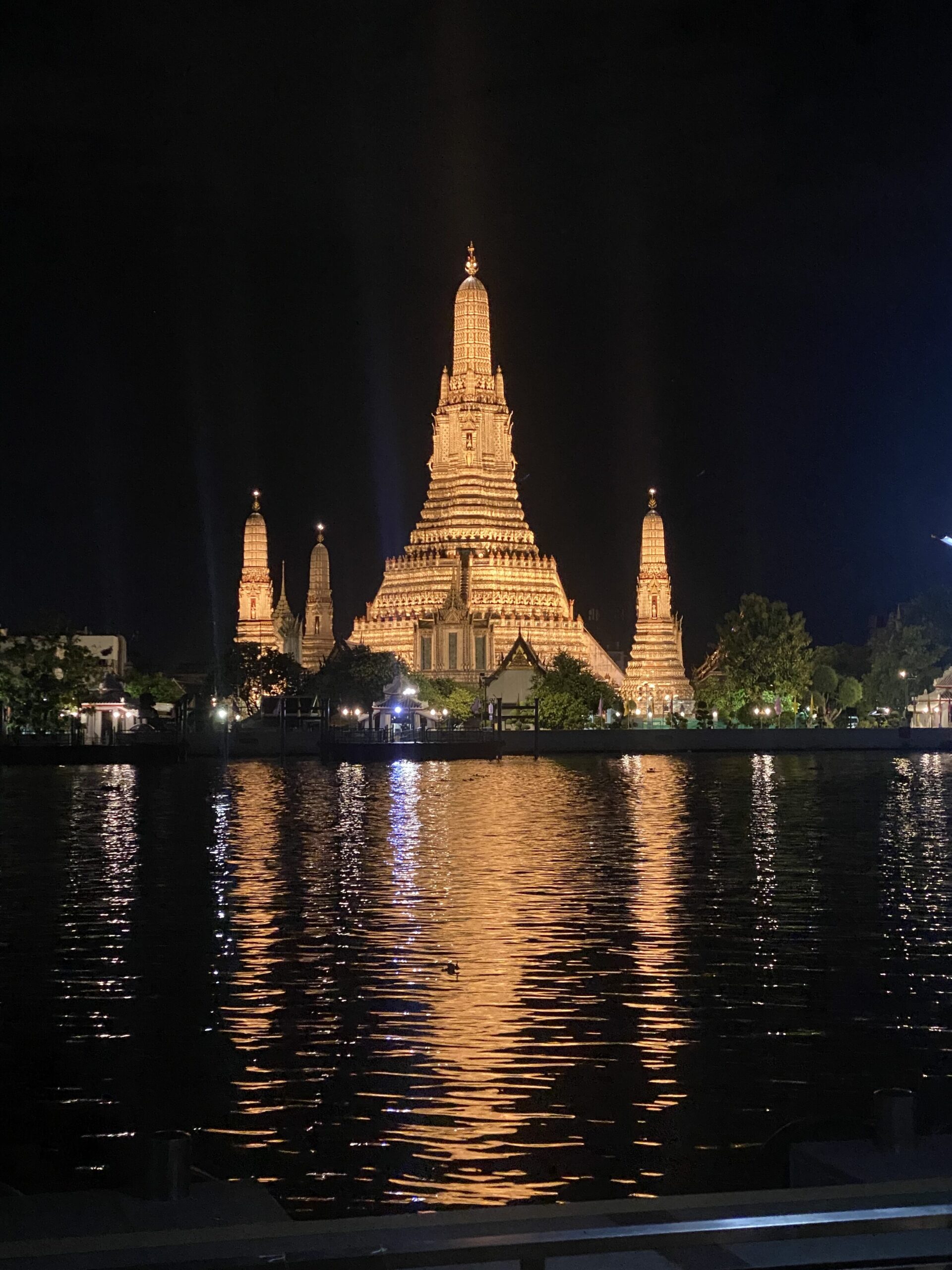
Wat Arun Ratchawararam Ratchawaramahawihan dates back to the 17th century and is named after Aruna, the charioteer of the Hindu sun god, Surya. This name is fitting for the temple, especially since the temple reflects the sun’s rays so beautifully.
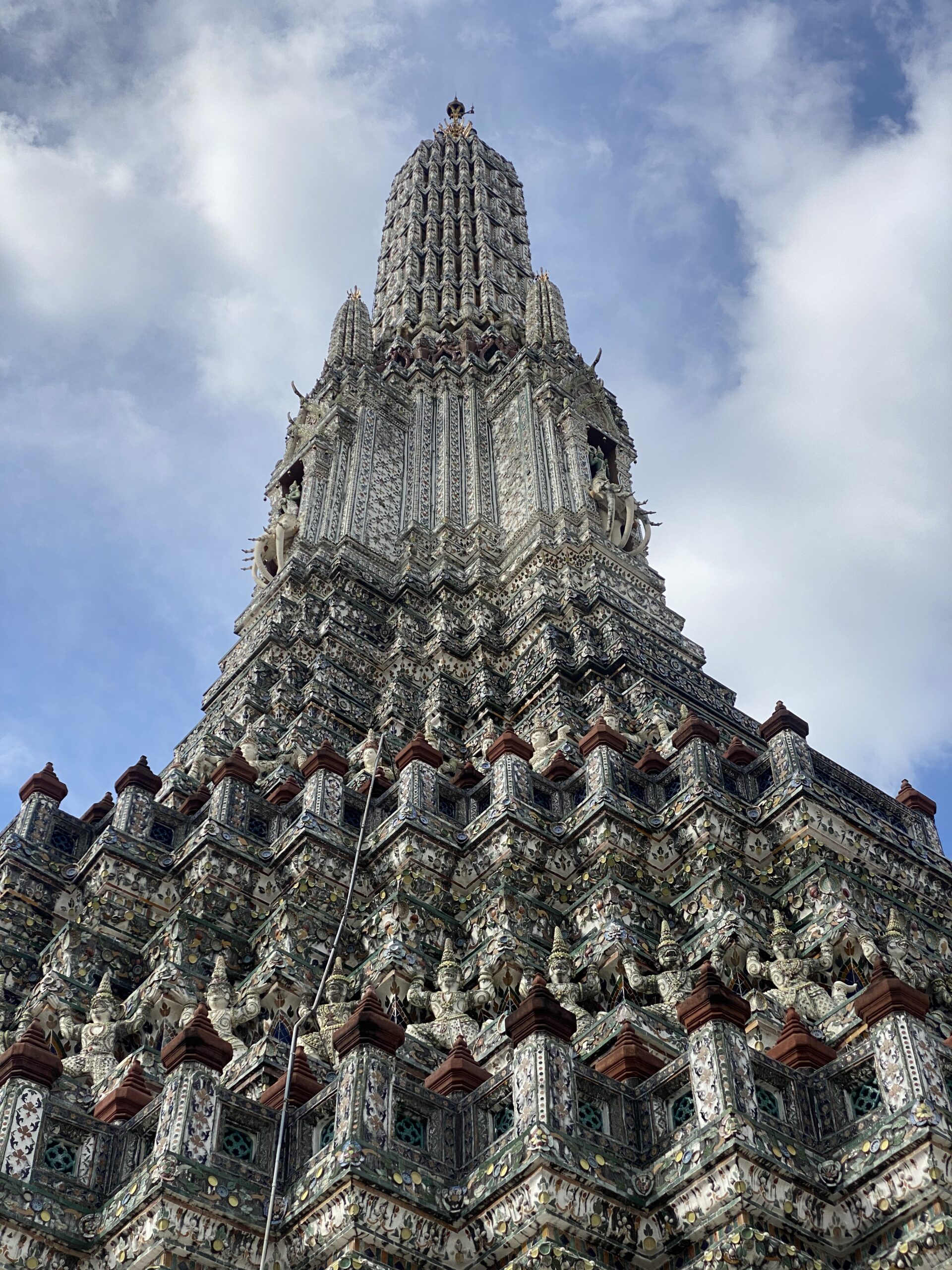
One of the most iconic features of the temple is its central ‘prang’ (tower), soaring with encrusted colourful porcelain. The ‘prang’ symbolises Mount Meru, the sacred mountain at the centre of the universe in Hindu-Buddhist cosmology. Standing at approximately 80 meters tall, the ‘prang’ is crowned with a seven-pronged trident, often referred to as the Trident of Shiva.
But beyond its architectural brilliance lies a story that many overlook.
The Giants of Wat Arun’s Eastern Gate
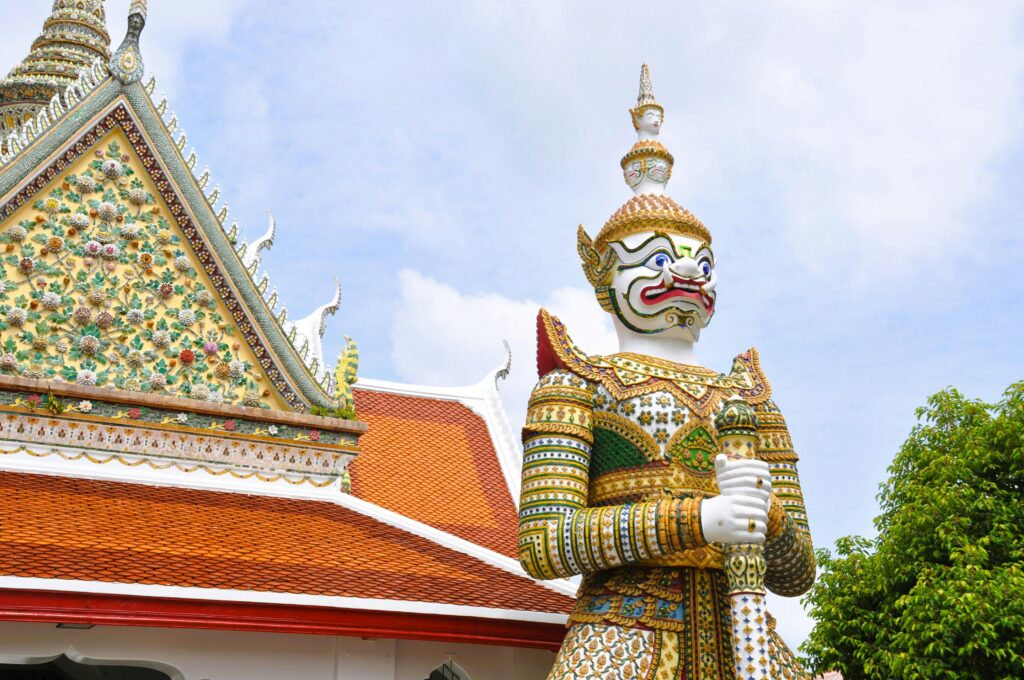
As you approach Wat Arun’s ‘ubosot’ (ordination hall), your eyes are immediately drawn to two colossal figures that are more than just statues, they are the divine guardians of the temple, deeply woven into Thai culture and mythology. These giants are known as Thotsakan and Sahatsadecha, symbols of sacred protection found in Thailand’s most revered temples.
Each standing over six meters tall, they are painted in vibrant colours and decorated with intricate ceramic tiles that shimmer under the sunlight. Traditionally called ‘Phaya Yak’ (Giant Guardians), they serve as the temple’s mythical guards.

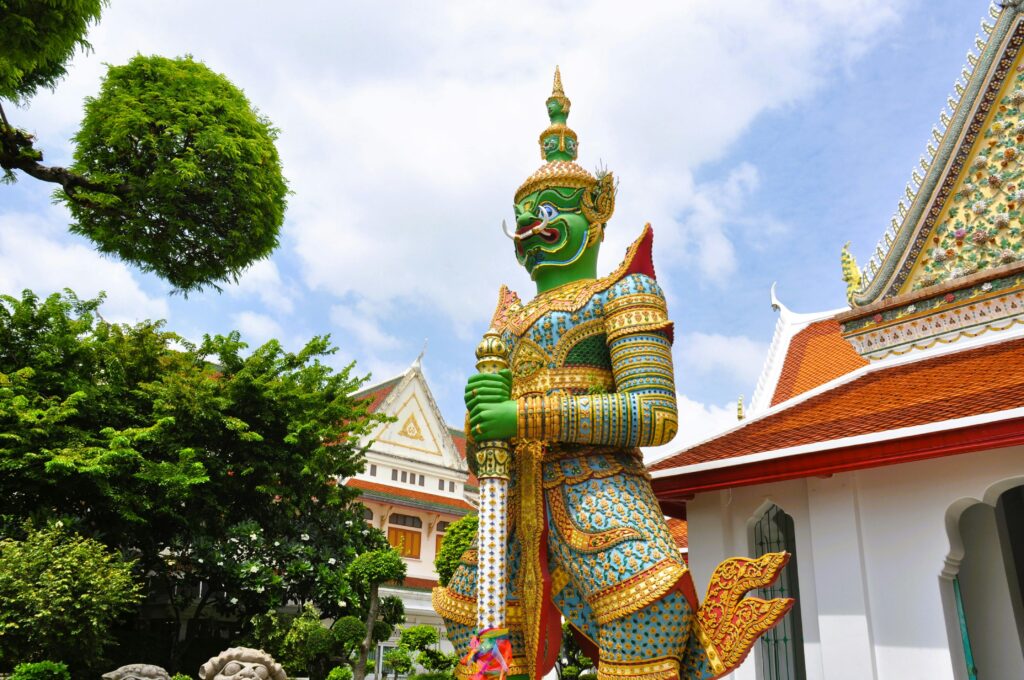
Thotsakan: The Green Guardian
On one side stands the green-skinned giant, Thotsakan, the Thai name for Ravana, the powerful demon king from the Thai epic Ramakien (Thailand’s localised version of the Ramayana). In Thai mythology, Thotsakan is a figure of immense strength and mystique. Though traditionally depicted as an antagonist in the original epic, at Wat Arun he takes on a sacred, protective role, guarding the temple from unseen forces.
Sahatsadecha: The White Guardian
On the opposite side stands the white-skinned giant, Sahatsadecha. In the Ramakien, he is described as a mighty ruler with one thousand heads and two thousand arms. He once governed the city of Pahngtan and fought as an ally of Thotsakan in the war against Rama and the monkey army led by Hanuman. Together with Thotsakan, he stands guard to ensure no harmful force crosses into the sacred inner sanctum of Wat Arun.
Yakshas as Guardians of Temples in Thailand
These giants are also known as Yakshas, protectors of Buddhist teachings and defenders of holy spaces in Thai Buddhist tradition. This originated from ancient Indian Hindu and Buddhist cosmology, where they were powerful nature spirits and guardians of wealth and sacred places. As these beliefs spread into Southeast Asia, Yakshas were adapted into Thai folklore as giant guardian beings, fearsome in appearance yet protective in role. Their presence marks the boundary between the physical world and the spiritual sanctuary within the temple.
You will find Yaksha guardians at many temples across Thailand, standing as eternal symbols of protection and reverence. Even today, locals and visitors sometimes pay their respects to these guardians, believing they offer safety, protection and good fortune to those who approach with sincerity and respect. They symbolise strength, vigilance, and the balance between chaos and order in the spiritual world.
Thailand’s mythological treasures run deep, and this is only the beginning. We will continue exploring the legends, mysteries, and spiritual lore that shape this region. Stay tuned!
If you’re interested in the myths of Southeast Asia, read 9 Horrifying Signs the Curse of Mahsuri was Real


Leave a Reply